



5 Commercial Ice Makers, One Clear Winner—Here’s the Frosty Truth
September 15, 2025
Quick Comparison: Buy Hoshizaki or Manitowoc in 2025?
September 16, 2025

I still remember the day a local restaurant owner called me, frantic because their commercial refrigeration unit was malfunctioning, putting their entire inventory at risk. It was a stark reminder of how crucial proper refrigerator maintenance is for businesses that rely on preserving perishable goods.
Did you know that a significant number of businesses face financial losses due to temperature control issues in their refrigeration units? In fact, maintaining the right cooling efficiency is not just about keeping products fresh; it’s also about projecting a professional image to your customers.
In this article, I’ll outline the four most common mistakes businesses make with their glass door refrigeration units that can severely impact their image and bottom line. By understanding these critical issues and learning how to address them, you can ensure your business runs smoothly and efficiently.
Key Takeaways
- Understand the critical role of maintenance in commercial refrigeration.
- Learn how to identify common issues with glass door refrigeration units.
- Discover the impact of temperature control on product preservation.
- Improve your business’s efficiency by avoiding costly mistakes.
- Enhance your professional image by ensuring proper refrigerator function.
The Critical Role of Glass Door Refrigeration in Business Image
A well-maintained glass door refrigerator can be a powerful marketing tool for businesses. It not only keeps products at the right temperature but also showcases them in an appealing manner, directly influencing customer purchasing decisions.
First Impressions Matter: How Refrigeration Affects Customer Perception
The first thing customers notice when entering a store is often the display of products in glass door refrigeration units. A spotless and well-organized commercial refrigerator signals to customers that the business values quality and cleanliness. On the other hand, a poorly maintained unit can deter customers and damage the business’s reputation.
The Dual Purpose: Preservation and Presentation
Glass door refrigeration serves a dual purpose: it maintains food safety through proper temperature control and showcases products in their best light. Proper lighting, organization, and temperature consistency directly impact product presentation and customer purchasing decisions. By leveraging their refrigeration equipment effectively, businesses can enhance their merchandising and attract more customers.
| Aspect | Impact on Business Image | Customer Perception |
|---|---|---|
| Maintenance | A well-maintained unit reflects positively on the business. | Customers perceive the business as quality-focused. |
| Product Presentation | Attractive display enhances the business’s image. | Customers are more likely to make a purchase. |
| Temperature Control | Proper temperature control ensures product safety. | Customers trust the business with their food safety. |
Mistake #1: Improper Temperature Management
One of the most critical mistakes businesses make with glass door refrigeration is improper temperature management. Maintaining the right temperature is crucial for preserving the quality and safety of your products.
Signs Your Commercial Refrigerator Isn’t Maintaining Proper Temperature
There are several warning signs that indicate your commercial refrigerator isn’t maintaining the proper temperature. These include:
- Condensation or frost buildup on the walls or shelves
- Spoiled or degraded products
- Compressor cycling issues, which can lead to increased energy consumption and reduced equipment lifespan
Regularly checking for these signs can help you identify temperature issues before they become major problems.
Common Causes of Temperature Fluctuations
Temperature fluctuations in commercial refrigerators can be caused by several factors, including:
- Improper thermostat settings
- Airflow restrictions due to overcrowding or blocked vents
- Seal integrity issues, such as damaged or worn-out gaskets
- Component malfunctions, like faulty compressors or fans
Understanding these causes can help you take corrective action to maintain the desired temperature.
My Recommended Temperature Settings for Different Product Types
The ideal temperature setting for your commercial refrigerator depends on the type of products you’re storing. Here are some general guidelines:
- For fresh produce, a temperature range of 38°F to 42°F (3°C to 6°C) is recommended.
- For dairy products and meats, a temperature range of 32°F to 38°F (0°C to 3°C) is ideal.
- For frozen foods, a temperature of 0°F (-18°C) or below is necessary.
Adjusting your thermostat to the correct temperature setting is crucial for maintaining product quality and safety.
To adjust the thermostat, refer to your owner’s manual for specific instructions. For electronic thermostats, press the P button, use the arrow buttons to adjust the temperature, and press P again to store the setting.
Mistake #2: Neglecting Regular Cleaning and Maintenance
Neglecting regular cleaning and maintenance is a critical mistake that can lead to significant issues with your glass door refrigeration unit. As someone who has worked with numerous commercial refrigeration systems, I’ve seen firsthand how neglecting maintenance can lead to decreased efficiency, increased energy costs, and even equipment failure.

The Hidden Dangers of Dirty Condenser Coils
Dirty condenser coils are a common issue in neglected refrigeration systems. When dust and dirt accumulate on the condenser coils, it forces the refrigeration unit to work harder, consuming more power while delivering less cooling efficiency. This not only increases your energy bills but also shortens the lifespan of your equipment.
The “lint free” condenser design in our commercial refrigerators and freezers is meant to minimize the need for condenser cleaning. However, it’s still crucial to schedule check-ups and cleaning every three to four months to ensure proper operation. The frequency may vary depending on the location and environment in which the freezer is installed.
My 3-Step Process for Proper Condenser Cleaning
Cleaning the condenser coils is a straightforward process that can be done with the right tools and precautions. Here’s my 3-step process:
- Turn off the power to the refrigeration unit to avoid any accidents or electrical shocks.
- Use a soft-bristled brush or a specialized condenser cleaning brush to gently remove dust and dirt from the coils.
- Use a vacuum cleaner or a damp cloth to remove any remaining debris, taking care not to damage the delicate components.
Creating an Effective Maintenance Schedule
To maintain your glass door refrigeration unit effectively, it’s essential to create a maintenance schedule tailored to your business environment. In dustier locations, more frequent cleaning may be necessary. Regular maintenance should include not just the condenser coils but also door gaskets, interior surfaces, and exterior glass to maintain both function and appearance.
| Maintenance Task | Frequency | Importance |
|---|---|---|
| Condenser Coil Cleaning | Every 3-4 months | High |
| Door Gasket Inspection | Monthly | Medium |
| Interior and Exterior Cleaning | Weekly | High |
By following this maintenance schedule and understanding the importance of regular cleaning, you can significantly reduce the risk of equipment failure, lower your energy costs, and maintain the overall appearance and functionality of your glass door refrigeration unit.
Mistake #3: Improper Product Loading and Arrangement
The way you load products into your glass door refrigerator can significantly impact its performance. Proper airflow is crucial for maintaining consistent temperatures and ensuring that all items are kept at the right condition.
The Science of Airflow in Glass Door Refrigeration
In a glass door refrigeration unit, airflow plays a critical role in cooling efficiency. When products are loaded improperly, it can block the circulation of cold air, leading to warm spots and potentially spoiling food. This not only affects the quality of the products but also puts a strain on the commercial refrigerator, increasing energy costs.
Strategic Product Placement for Maximum Visual Appeal
To maximize visual appeal while maintaining proper airflow, it’s essential to strategically place products within the commercial refrigerator. Placing popular items at eye level can increase sales, while ensuring that the arrangement allows for unobstructed air circulation.
My Tips for Balancing Aesthetics and Functionality
To balance aesthetics and functionality, I recommend leaving adequate space between products for air to circulate. Avoid overloading the unit with too many items at once, as this can compromise the system’s efficiency. Regularly rearranging products can also help maintain both the visual appeal and the operational efficiency of your glass door refrigeration.
Mistake #4: Ignoring Door Seal Integrity
Ignoring door seal integrity is a critical mistake that can lead to significant issues with your glass door refrigeration units. The door gasket, or seal, is a vital component that ensures the door closes tightly, preventing cold air from escaping and maintaining the efficiency of the unit.

How Damaged Gaskets Compromise Your Entire System
Damaged or deteriorating door seals can allow cold air to escape and warm, humid air to enter, creating condensation issues, frost buildup, and increased energy consumption. This not only affects the temperature stability but also puts unnecessary strain on other refrigeration components, potentially leading to premature wear and tear.
Warning Signs of Seal Deterioration
It’s essential to identify signs of seal deterioration early to prevent more significant problems. Look for visible cracks, brittleness, or discoloration in the gasket, as well as condensation around the door frames or frost accumulation. These signs indicate that the seal is compromised and may need to be replaced.
Proper Seal Maintenance and Replacement Guidelines
To maintain door seal integrity, regular cleaning with appropriate solutions and lubricating hinges can help prevent excess strain on gaskets. When inspecting door seals, I recommend using the dollar bill test and visual examination techniques to identify problems before they cause system issues. If replacement is necessary, selecting the correct replacement parts and following proper installation techniques is crucial.
By maintaining door seal integrity, you can prevent unnecessary strain on other refrigeration components, extending the system’s lifespan and reducing operational costs.
The Financial Impact of Glass Door Refrigeration Mistakes
Neglecting glass door refrigeration maintenance can have severe financial consequences for businesses. The costs associated with inefficient refrigeration can be substantial, affecting a company’s bottom line in various ways.
Poor maintenance leads to increased energy consumption, which directly impacts monthly utility bills. For instance, dirty condensers and faulty door seals can cause the refrigeration unit to work harder, consuming more power while delivering less cooling capacity. This not only wastes energy but also reduces the overall efficiency of the refrigeration system.
Calculating the Energy Costs of Poor Maintenance
To understand the financial impact, it’s essential to calculate the actual energy costs associated with inefficient refrigeration. Problems like dirty condensers and faulty door seals can increase energy consumption by up to 20%. For example, a dirty condenser can cause the compressor to work harder, leading to higher energy bills.
- Dirty condensers: Increase energy consumption by up to 15%
- Faulty door seals: Allow cold air to escape, increasing energy consumption by up to 10%
- Inefficient compressors: Consume more power, leading to higher energy bills
The Hidden Costs of Product Loss and Equipment Failure
Beyond energy costs, poor refrigeration maintenance can lead to product loss and equipment failure. Temperature inconsistencies can cause products to spoil, resulting in direct inventory losses and damage to customer trust. Moreover, neglected maintenance can lead to prematurecompressorfailure, resulting in expensive emergency repairs and replacement costs.
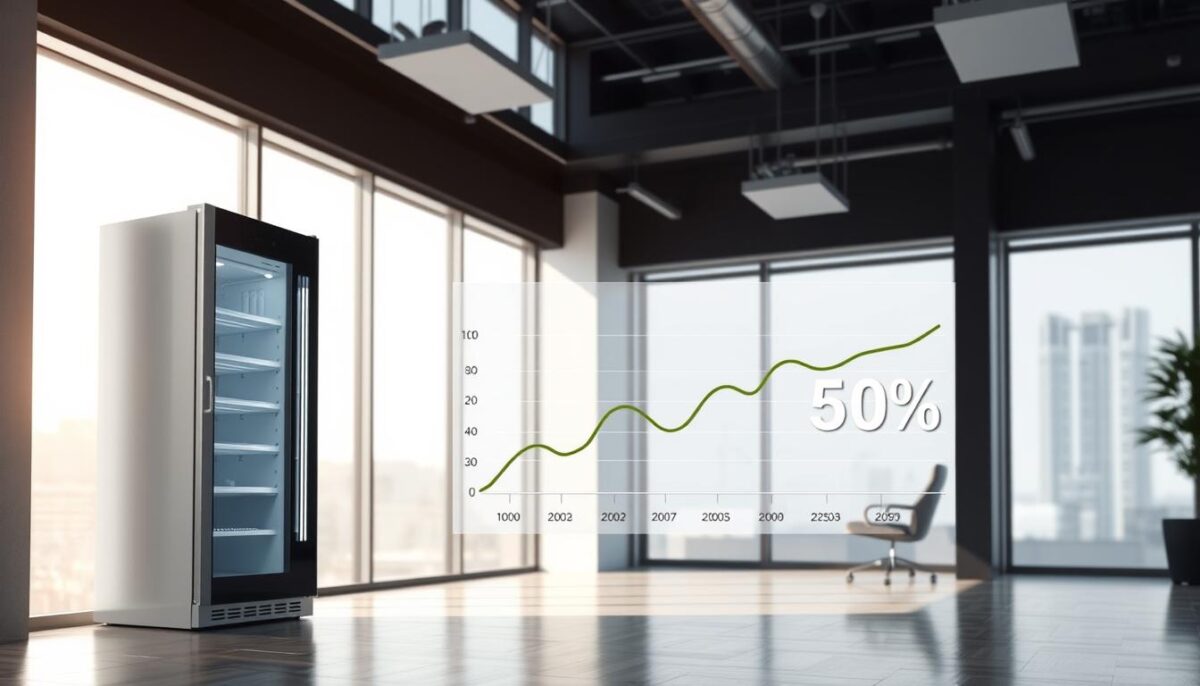
By understanding the financial impact of glass door refrigeration mistakes, businesses can take proactive steps to maintain their refrigeration units, reduce energy consumption, and prevent costly equipment failures.
Troubleshooting Common Glass Door Refrigeration Problems
Troubleshooting glass door refrigeration problems is crucial for maintaining optimal performance and preventing costly repairs. Glass door refrigerators are prone to specific issues that can impact their efficiency and the quality of the products they store.
Addressing Unusual Noises and Operation Issues
Unusual noises from your glass door refrigerator can indicate potential problems. Rattling, buzzing, clicking, or humming sounds may suggest issues with the evaporator fan, condenser coils, or compressor. I recommend checking these components and ensuring they are clean and functioning properly. For instance, a rattling noise could be due to a loose part, while a buzzing sound might indicate a faulty fan motor.
Dealing with Excessive Frost Accumulation
Excessive ice or frost buildup on the evaporator coils can significantly reduce your refrigerator’s cooling performance. To address this, inspect the evaporator coil through the evaporator fan openings. If you notice ice or frost covering the front of the coil, it may indicate a defrost problem. Check the defrost cycle and ensure it’s working correctly. Defrost issues can lead to increased energy consumption and reduced shelf life of stored products.
When to Call a Professional vs. DIY Solutions
While some refrigeration issues can be resolved through DIY maintenance, others require professional attention. For example, if you notice signs of refrigerant leaks or if the refrigerator is not cooling despite your best efforts to troubleshoot, it’s time to call a professional. Always ensure your safety when attempting DIY repairs, especially when dealing with electrical components or refrigerant systems.
Leveraging Technology for Better Refrigeration Management
The integration of technology in refrigeration systems is enhancing performance, safety, and presentation, making it a vital aspect of modern business operations. As businesses strive to maintain high standards of quality and efficiency, leveraging technology becomes crucial.
Remote Monitoring Systems for Temperature Control
Remote temperature monitoring systems provide real-time data and alerts, allowing for immediate response to potential issues before they cause product loss or system damage. Our SmartConnect system leverages the power of IoT to deliver improved business efficiency, enhanced customer service, and simplified quality assurance compliance. It accesses commercial refrigerator data, including temperature, door opening status, and power failures, enabling proactive measures to ensure optimal conditions.
Smart Features That Enhance Performance and Presentation
Smart features such as energy-efficient LED lighting systems, programmable defrost cycles, and automatic door closers not only enhance the performance of refrigeration units but also improve presentation. These features contribute to maintaining a consistent temperature, reducing energy consumption, and ensuring that products are displayed attractively.
| Feature | Benefit | Impact on Business |
|---|---|---|
| Remote Temperature Monitoring | Real-time data and alerts | Reduced product loss and improved compliance |
| Energy-Efficient LED Lighting | Reduced energy consumption | Lower operational costs and enhanced product display |
| Programmable Defrost Cycles | Optimized defrosting | Improved system performance and reduced maintenance |
By adopting these technological advancements, businesses can significantly improve their refrigeration management, ensuring optimal performance, safety, and presentation. The use of smart technology in refrigeration is a step towards achieving better profitability and customer satisfaction.
Conclusion: Protecting Your Investment and Image
Proper maintenance of your commercial refrigerator is key to protecting your business image. To recap, the four critical mistakes to avoid are improper temperature management, neglecting regular cleaning, improper product loading, and ignoring door seal integrity. Ensuring your refrigerator operates within the correct temperature range and maintaining a clean environment are crucial. The evaporator fan and compressor are vital components that require regular checks. Proper refrigerant management by qualified professionals is also essential for both safety and efficiency. By implementing a comprehensive maintenance schedule, you can extend the life of your units, reduce energy costs, and enhance customer experience. Investing time in proper maintenance now will pay dividends in the long run.
By taking immediate action to correct these common mistakes and focusing on regular maintenance, you can protect both your equipment investment and your business reputation.
FAQ
What is the ideal temperature setting for my commercial refrigerator?
The ideal temperature setting depends on the type of products you’re storing. For most perishable items, a temperature range between 38°F and 40°F is recommended. However, for certain products like ice cream or frozen foods, a much lower temperature is required.
How often should I clean my condenser coils?
I recommend cleaning your condenser coils at least every 3 months to ensure optimal performance and efficiency. Dirty coils can lead to increased energy costs and reduced equipment lifespan.
What are the signs of a refrigerant leak in my commercial refrigerator?
Signs of a refrigerant leak include increased energy bills, reduced cooling performance, and unusual noises. If you suspect a leak, it’s essential to call a professional to diagnose and repair the issue promptly.
How can I prevent excessive frost accumulation in my glass door refrigerator?
To prevent excessive frost accumulation, ensure proper defrosting, check the door seals for damage, and verify that the evaporator fan is working correctly. Regular maintenance can help prevent this issue.
Can I perform maintenance tasks on my commercial refrigerator myself?
While some tasks like cleaning condenser coils can be done in-house, more complex issues like refrigerant leaks or compressor problems require professional expertise. It’s crucial to know when to call a professional to avoid further damage.
How can I optimize airflow in my glass door refrigerator?
To optimize airflow, ensure that products are arranged to allow for adequate air circulation, and avoid overloading the shelves. This helps maintain a consistent temperature and prevents moisture buildup.
What are the benefits of remote monitoring systems for my commercial refrigerator?
Remote monitoring systems allow you to track temperature, humidity, and other vital parameters in real-time, enabling you to respond promptly to any issues. This can help prevent product loss and reduce energy costs.