



6 Hidden Secrets Behind Jackson vs Hobart Cleaning Performance
September 9, 2025
Which Commercial Dishwasher Actually Saves Time and Water? I Tested Them All
September 10, 2025
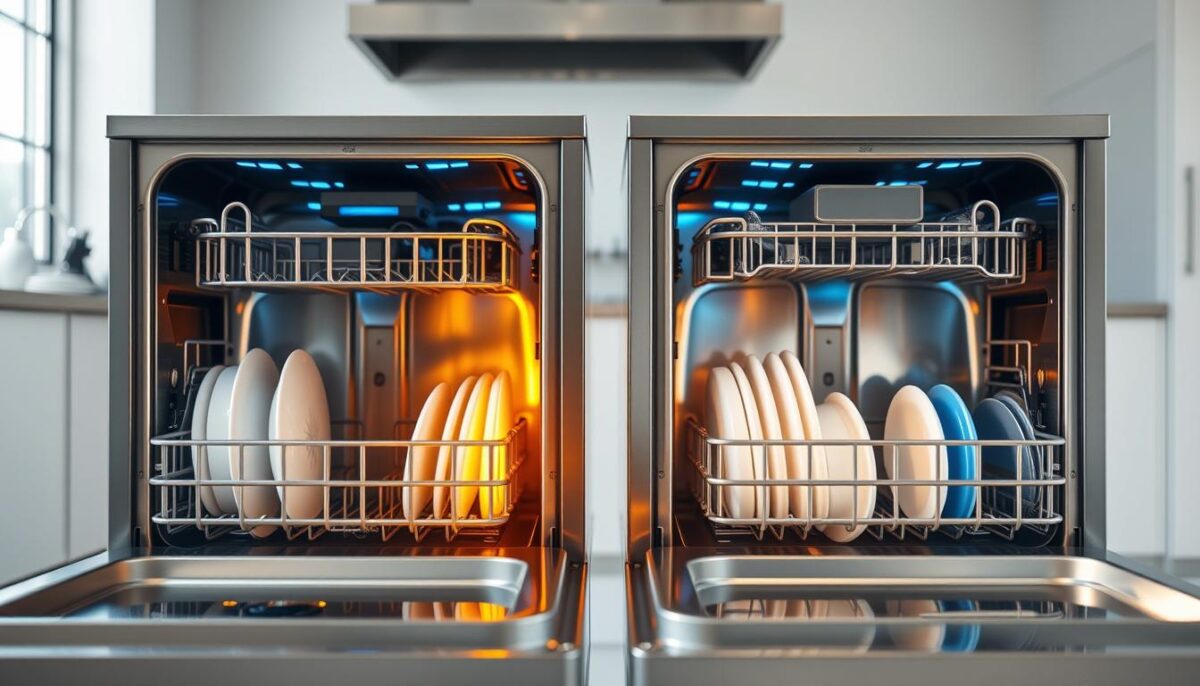
As a restaurant owner, I’ve faced the daunting task of choosing the right commercial dishwasher for my kitchen. It’s a decision that impacts not only my energy bills but also the hygiene and satisfaction of my customers. Did you know that improper dish sanitization can lead to a significant increase in customer complaints and even health inspections?
Maintaining cleanliness is crucial in a restaurant setting, and the choice between high-temp and low-temp dishwashers plays a critical role in this. With the average restaurant consuming a significant amount of energy, the right dishwasher can make a substantial difference in operational costs.
The debate between heat sanitization and chemical sanitization methods is ongoing, and understanding the differences is key to making an informed decision. So, how do you choose the right dishwasher for your restaurant’s unique needs?
Key Takeaways
- Understanding the differences between high-temp and low-temp dishwashers is crucial for restaurant owners.
- Proper sanitization is essential for food safety and customer satisfaction.
- The choice of dishwasher impacts energy consumption and operational costs.
- Heat sanitization and chemical sanitization are two different methods with distinct advantages.
- Making the right choice depends on specific restaurant needs, space, and budget constraints.
Understanding Commercial Dishwasher Basics
A commercial dishwasher is not just an appliance; it’s a critical component of a restaurant’s operation. Building an efficient warewashing station is crucial for running a successful foodservice operation.
Proper sanitization is at the heart of this operation. As emphasized by food safety regulations, “sanitization is key to preventing the spread of illnesses.” Ensuring that dishes are sanitized correctly is not just about compliance; it’s about customer safety and trust.
The Importance of Proper Sanitization in Restaurants
Proper sanitization directly impacts food safety regulations and health code compliance in restaurants. Sanitizing dishes effectively removes harmful bacteria and viruses, ensuring a clean environment for food preparation.
Key Factors in Choosing the Right Dishwasher
When selecting a commercial dishwasher, several factors come into play, including water supply, power requirements, and space constraints. The volume and type of dishes processed daily should also influence your choice, ensuring that the dishwasher meets the specific needs of your kitchen.
By understanding these basics, restaurant owners can make informed decisions about their warewashing needs, ultimately enhancing kitchen efficiency and customer satisfaction.
High-Temp vs Low-Temp Dishwasher: The Fundamental Differences
When it comes to commercial dishwashers, the debate between high-temperature and low-temperature models is centered around their distinct approaches to sanitization. The primary difference between these two types of dishwashers is their method of sanitization: heat versus chemicals.

Sanitization Methods Compared
High-temperature dishwashers rely on hot water to sanitize dishes, whereas low-temperature models use chemical sanitizers. Heat sanitization involves using water at a high temperature to kill bacteria, while chemical sanitization uses sanitizing agents to achieve the same goal. The choice between these methods depends on the specific needs of the restaurant.
Temperature Requirements for Each Type
High-temp dishwashers require water to be at least 180°F during the final rinse cycle to effectively sanitize dishes. In contrast, low-temp dishwashers operate at lower temperatures, typically around 120°F, and rely on chemical sanitizers to ensure dishes are properly sanitized. Understanding these temperature requirements is crucial for selecting the right dishwasher for your restaurant’s needs.
High-Temperature Commercial Dishwashers: Benefits and Drawbacks
The high-temperature commercial dishwasher is a top contender in the warewashing machine market, offering superior cleaning and sanitization. This type of dishwasher uses hot water in its rinse cycle to remove food residue and sanitize dishes effectively.
How Heat Sanitization Works
Heat sanitization in high-temp commercial dishwashers works by using water that exceeds 180°F during the rinse cycle. This achieves a surface temperature of 160°F on dishes and flatware, effectively killing bacteria if sustained for at least 10 seconds. The science behind this process is straightforward: high temperatures denature proteins in bacteria, leading to their death.
Advantages of High-Temp Systems
High-temp commercial dishwashers offer several advantages, including superior cleaning power, especially for greasy dishes and protein residues. They also eliminate the need for chemical sanitizers, which can affect food taste. Additionally, the higher evaporation rate results in faster drying times, improving kitchen efficiency.
Potential Disadvantages to Consider
While high-temp dishwashers have several benefits, there are also potential drawbacks to consider. These include higher initial costs for equipment and installation, the need for specialized electrical requirements, and potentially higher energy consumption. Moreover, these systems can create a warmer kitchen environment, which may be a concern in smaller spaces.
Low-Temperature Commercial Dishwashers: Benefits and Drawbacks
Low-temperature commercial dishwashers offer an alternative to high-temperature models, utilizing chemicals for sanitization. These dishwashers use FDA-approved chemicals like chlorine, iodine, or quaternary ammonium compounds (Quats) to kill bacteria, ensuring dishes are sanitized without the need for extremely hot water.
How Chemical Sanitization Works
Chemical sanitization in low-temperature commercial dishwashers involves using specific chemicals to kill bacteria and other pathogens. The process typically occurs at a wash and rinse cycle temperature of around 120°F, with the chemicals compensating for the lower heat to achieve sanitization.
Advantages of Low-Temp Systems
The primary advantages of low-temperature commercial dishwashers include lower initial equipment costs and simpler electrical requirements, as they can be installed with a standard 120V power outlet. Additionally, they offer potential energy savings by not requiring water to be heated to high temperatures.
Potential Disadvantages to Consider
Despite their advantages, low-temperature commercial dishwashers have some drawbacks. These include the ongoing cost of purchasing sanitizing chemicals, potential impacts on food and beverage taste due to chemical residues, and the possibility of dishware discoloration or corrosion over time. Moreover, these systems often result in longer drying times, which can affect operational efficiency.
Making the Right Choice for My Restaurant
Choosing between a high-temp and low-temp dishwasher requires careful consideration of various factors that affect my restaurant’s efficiency and hygiene. “The right dishwasher can make all the difference in maintaining a smooth operation in the kitchen,” as noted by industry experts.
Space and Installation Considerations
When evaluating commercial dishwashers, it’s crucial to assess the available space in my kitchen. I need to consider the layout, ensuring there’s enough room for the dishwasher and adequate ventilation, particularly if I opt for a high-temp machine that may require a vent hood.
Installation requirements also play a significant role. I must verify the type of power outlet available and whether my building supplies consistently hot water. These factors will influence my decision between a high-temp and low-temp dishwasher.
Energy Efficiency and Long-Term Costs
Energy efficiency is another critical aspect to consider. High-temp machines consume more energy to heat water, while low-temp systems rely on chemical sanitizers, which have ongoing costs. I need to weigh these factors to determine the most cost-effective option for my restaurant.
A thorough cost analysis, including initial purchase price, installation, energy consumption, and maintenance over the dishwasher’s lifespan, will help me make an informed decision.
Food Type and Volume Considerations
The type of food I serve and the volume of dishes processed daily are also vital considerations. High-temp machines are generally better at handling tough residues from greasy or protein-heavy foods. If my restaurant serves such dishes, a high-temp commercial dishwasher might be more efficient.
On the other hand, if I serve delicate menu items or bar drinks that could be affected by chemical sanitizers, a high-temp machine might be preferable. Ultimately, I need to match the dishwasher type to my restaurant’s specific operational needs and budget constraints.
Conclusion: Balancing Hygiene, Efficiency, and Cost
In the world of commercial dishwashing, the decision between high-temp and low-temp systems is influenced by factors such as energy consumption, sanitization requirements, and budget constraints. When choosing a commercial dishwasher, it’s crucial to consider the specific needs of your restaurant, including space limitations and the type of dishes being washed.
Both high-temp and low-temp dishwashers have their advantages. High-temp systems offer superior cleaning power and faster drying, while low-temp systems provide lower initial costs and potential energy savings. Regardless of the type chosen, proper sanitization is paramount. Regular maintenance and staff training are also essential to maximize efficiency and lifespan.
Ultimately, the right dishwasher is an investment in food safety and operational efficiency. By considering long-term operational costs and consulting with professional equipment suppliers, restaurant owners can make an informed decision that meets their unique needs.
FAQ
What is the main difference between a high-temperature and low-temperature commercial dishwasher?
The primary difference lies in their sanitization methods. High-temperature dishwashers use hot water to sanitize dishes, while low-temperature models rely on chemical sanitization.
How do I choose the right dishwasher for my restaurant?
When selecting a dishwasher, consider factors such as kitchen space, energy efficiency, the type and volume of dishes, and long-term costs. It’s essential to balance hygiene, efficiency, and cost.
What are the benefits of using a high-temperature commercial dishwasher?
High-temperature dishwashers effectively sanitize dishes using hot water, reducing the risk of bacterial contamination. They also tend to be more environmentally friendly, as they don’t require chemical sanitizers.
Are low-temperature commercial dishwashers less effective at sanitizing dishes?
Not necessarily. Low-temperature dishwashers use chemical sanitizers to effectively sanitize dishes. However, they require proper maintenance and adherence to sanitizing protocols to ensure effectiveness.
How do I ensure my dishwasher is properly installed and maintained?
Proper installation involves considering factors like kitchen layout, plumbing, and ventilation. Regular maintenance includes checking and replacing worn-out parts, cleaning filters, and ensuring the correct dosage of sanitizing chemicals.
Can I save energy and costs with a commercial dishwasher?
Yes, you can. Look for energy-efficient models, and consider factors like water consumption, heat recovery, and insulation. Regular maintenance also helps optimize performance and reduce energy costs.
What type of dishwasher is best suited for a busy restaurant with a high volume of dishes?
For high-volume restaurants, a high-temperature commercial dishwasher might be more suitable due to its ability to handle a large number of dishes quickly. However, it’s crucial to consider factors like energy efficiency and costs.
How often should I sanitize my dishwasher?
Regular sanitization of the dishwasher itself is crucial. Check the manufacturer’s guidelines for recommended sanitization frequency, and ensure you’re using the correct sanitizing protocols to maintain hygiene standards.