


How Upscale Restaurants Attract High-Spending Guests—And Keep Them Coming
November 1, 2025
Social Proof Strategies to Make Your Restaurant the Top Choice Locally
November 2, 2025
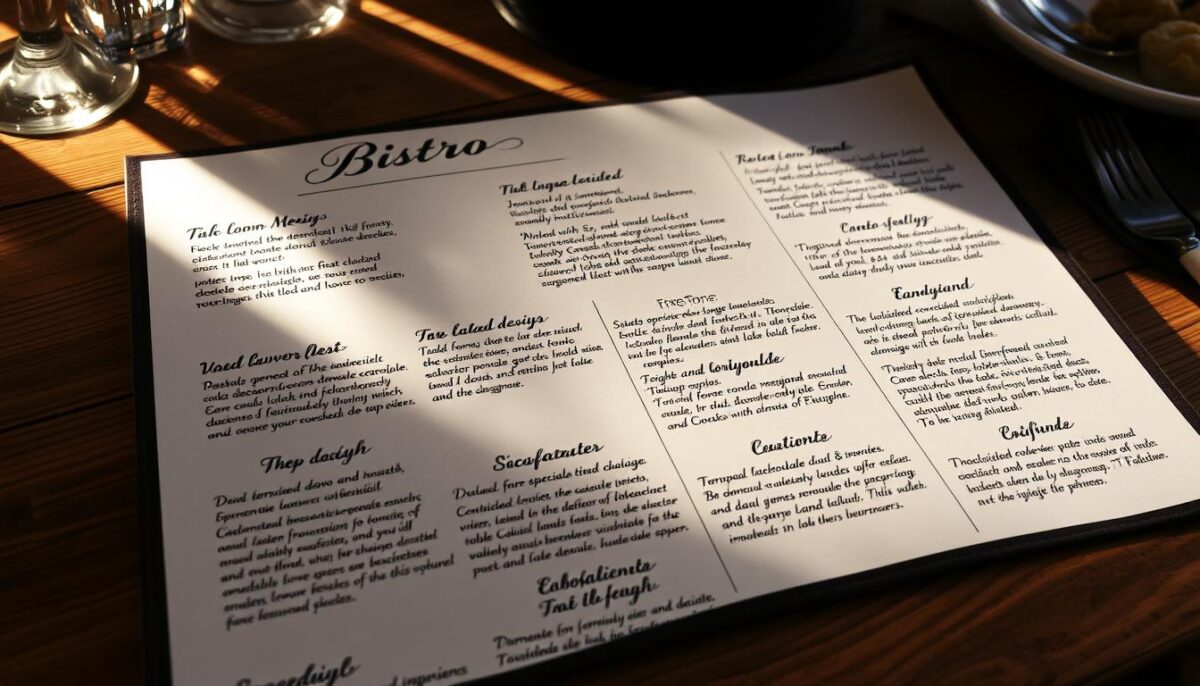
Imagine walking into a restaurant where the menu doesn’t just list dishes, but transports you to a world of flavors and aromas. This isn’t just a fantasy; it’s a reality for restaurants that master the art of descriptive menu labels. According to a study by Dr. Wansink of Cornell University, using such labels can boost sales by as much as 27%. In a competitive dining landscape, this can be the difference between a crowded dining room and an empty one.
The power of menu descriptions lies not just in their ability to make food sound appetizing, but in their capacity to enhance the dining experience. By highlighting the quality of ingredients and the care that goes into preparing each dish, restaurants can create a deeper connection with their customers. So, how can you harness this potential to increase your restaurant’s profits?
Key Takeaways
- Descriptive menu labels can increase sales by up to 27%.
- Appetizing food descriptions can provoke 45% of people to buy specific food items.
- Strategic menu wording enhances customer experience and satisfaction.
- Menu engineering is a science-backed approach to boosting restaurant profitability.
- Small changes to menu wording can yield significant financial results.
The Psychology Behind Menu Descriptions
The art of crafting menu descriptions is crucial for restaurants looking to stand out. Menu descriptions are not just about listing ingredients; they are a powerful tool that can influence customer decisions and drive sales.
Influencing Customer Decisions
Menu descriptions tap into the psychology of decision-making, affecting what customers order and how much they’re willing to spend. By using descriptive language, restaurants can create sensory expectations that enhance the dining experience, making food taste better in customers’ minds. Effective menu descriptions can transform ordinary dishes into must-try experiences, differentiating your restaurant from competitors.
- Descriptive language creates sensory expectations.
- Well-crafted menu descriptions can justify premium pricing.
- Menu descriptions guide customers toward higher-profit items.
The Financial Impact of Well-Crafted Menu Wording
Good menu descriptions lead to increased sales and customer satisfaction. When menu descriptions entice guests, they are more likely to order more items and return for future visits. Research shows that customers typically spend just 90 seconds looking at a menu, and effective descriptions can maximize this brief window of opportunity. By crafting menu descriptions that create emotional connections with guests, restaurants can increase loyalty and drive repeat business.
Menu Wording to Increase Restaurant Profits: Core Principles
Crafting the right menu descriptions can significantly impact your restaurant’s bottom line. Effective menu wording is not just about listing ingredients; it’s an art that combines clarity, creativity, and strategic thinking to drive sales and increase profits.
Clarity and Simplicity in Menu Structure
A well-organized menu structure is crucial for helping customers navigate your offerings quickly and make confident decisions. To achieve this, consider the three-part formula for menu descriptions: the name of the dish, the ingredients, and the “sell copy.” Typically, presenting these elements in this order provides clarity. However, to avoid monotony, occasionally reversing the order of the second and third parts can keep your menu engaging.
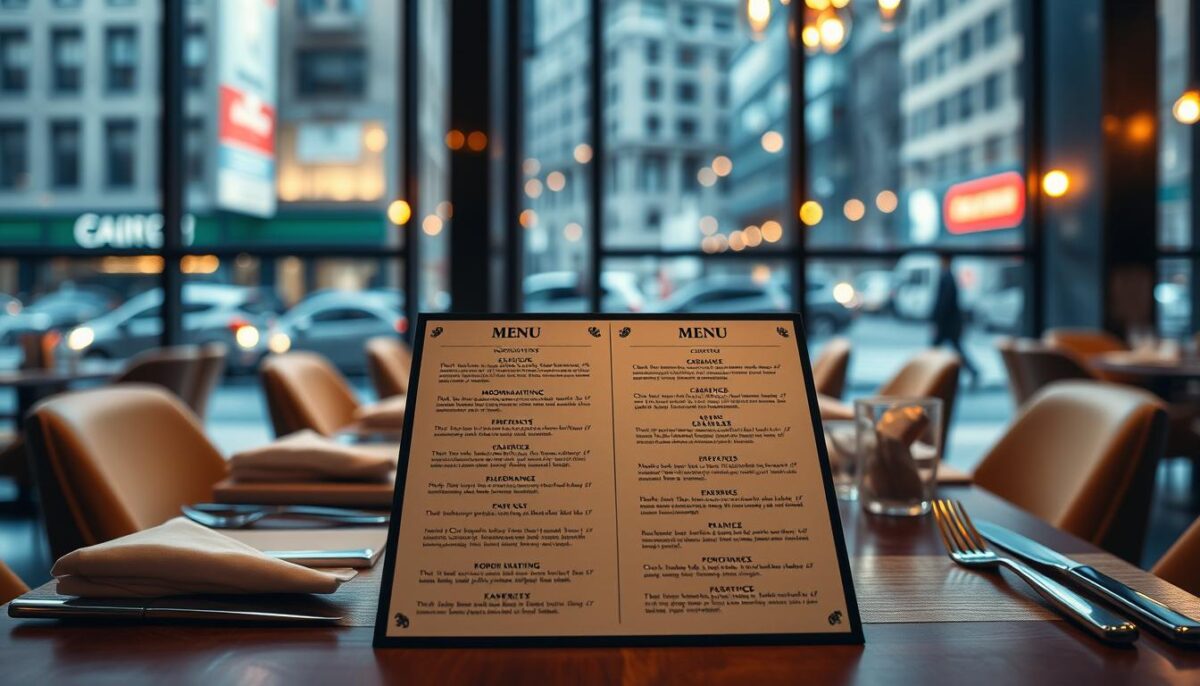
When it comes to menu engineering, the way you present your dishes can significantly influence customer choices. By highlighting the main ingredients first, starting with the most expensive and important ones, you can create a positive impression and justify the pricing.
The Three-Part Formula for Effective Menu Descriptions
Let’s break down the three-part formula further:
| Component | Description | Example |
|---|---|---|
| Name of the Dish | Attractive and descriptive name | Grilled Salmon Delight |
| Ingredients | Main ingredients listed first | Fresh salmon, garlic, lemon |
| “Sell Copy” | Language that sells the dish | Cooked to perfection, served with a side of herbs |
By adapting this formula to your restaurant concept, whether it’s fast-casual or fine dining, you can create menu descriptions that not only entice customers but also drive sales. Remember, the key is to balance creativity with clarity, ensuring your descriptions are both appealing and easy to understand.
Using Sensory Language to Stimulate Appetite
To make your dishes stand out, it’s essential to use sensory language that evokes the senses and creates expectation. By incorporating words that describe textures, flavors, and cooking methods, you can excite diners and make your menu items more appealing.
Power Words That Trigger Cravings
Certain words have the power to trigger cravings and make your dishes irresistible. These power words can be used to describe the texture, flavor, and aroma of your menu items. Examples include Crispy, Velvety, Juicy, Succulent, and Savory. Using these words can help create vivid mental images of your dishes and stimulate appetite.
Some other power words that can be used to describe cooking methods include Slow-cooked, Char-grilled, Wood-fired, and Smoked. These words not only describe the cooking process but also evoke a sense of care and attention to detail.
| Texture | Flavor | Cooking Method |
|---|---|---|
| Crispy, Flaky, Buttery | Savory, Spicy, Zesty | Grilled, Roasted, Smoked |
| Velvety, Silky, Melt-in-your-mouth | Succulent, Juicy, Rich | Slow-cooked, Braised, Sous-vide |
Describing Texture, Flavor, and Cooking Methods
When describing your menu items, it’s essential to use a combination of texture, flavor, and cooking method to create a vivid mental image. For example, instead of saying “grilled chicken,” you could say “char-grilled chicken breast, served with a rich, savory sauce and crispy roasted vegetables.” This description not only tells the customer what’s in the dish but also how it’s cooked and what it tastes like.
By using sensory language and power words, you can make your menu items more appealing and stimulate appetite. Whether you’re describing a juicy burger or a succulent seafood dish, using the right words can make all the difference in how appetizing it is to your customers.
Highlighting Ingredient Origins and Quality
In today’s culinary landscape, the story behind your ingredients can be just as important as the dish itself. As consumers become more conscious about what they eat, restaurants that highlight the origin and quality of their ingredients can differentiate themselves and command premium prices.
Leveraging Local and Seasonal Ingredients
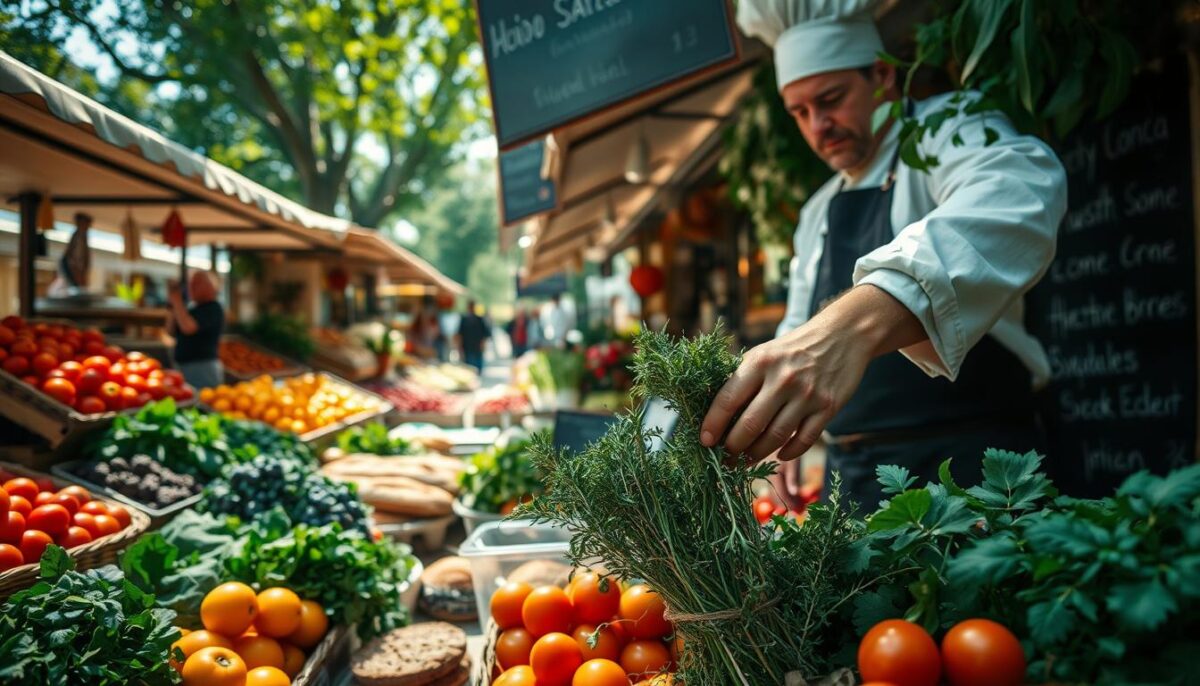
One effective way to add value to your menu items is by leveraging local and seasonal ingredients. According to a survey by Nielsen, 46% of consumers are willing to pay more for products and services that are locally sourced. This preference is driven by the perception that local ingredients are fresher and more sustainable. By highlighting the use of local produce, restaurants can appeal to this growing demographic and justify higher prices for their dishes.
For example, a menu description that reads, “Our summer salad features fresh, locally-sourced heirloom tomatoes and basil,” not only informs customers about the ingredients but also conveys a sense of quality and care in the preparation of the dish.
When and How to Mention Brand Names
Mentioning brand names of high-quality ingredients can also elevate the perception of your menu. Adding a few brand names among your menu descriptions makes it appear that you are buying “the good stuff,” which raises the value of all your dishes in the guests’ minds. However, it’s essential to use brand names judiciously to avoid overwhelming customers with too much information.
For instance, stating that your burger is made with “grass-fed beef from Creekstone Farms” adds credibility and perceived value to the dish. This strategy not only highlights the quality of the ingredients but also builds trust with your customers.
By effectively communicating the origin and quality of your ingredients, you can create a compelling narrative around your menu items, enhance customer trust, and ultimately drive sales.
Creating Emotional Connections Through Storytelling
When restaurants use storytelling in their menu descriptions, they can turn ordinary dishes into extraordinary experiences that resonate with customers.
Storytelling is a powerful tool that can elevate the dining experience by creating an emotional connection between the customer and the restaurant. By sharing the story behind a dish, restaurants can add depth and meaning, making the dining experience more memorable.
Differentiating Menu Items with Backstories
One effective way to create emotional connections is by sharing the backstory of a menu item. This could be the inspiration behind the dish, a family recipe, or a culinary experience that influenced its creation. For instance, a chef might share that a particular recipe was used at their own wedding reception, or that it’s a long-held family secret.
To uncover these stories, I recommend interviewing the chef while using a dictation device to capture their words verbatim. This not only saves time but also ensures that the story is authentic and retains its original flavor.
Evoking Nostalgia and Cultural Heritage
Storytelling can also evoke feelings of nostalgia and cultural heritage, making dishes more appealing. For example, describing a dish as being inspired by a traditional family recipe from a specific cultural background can create a sense of authenticity and connection with the customer.
By leveraging these stories, restaurants can justify premium pricing and make their menu items stand out. It’s about creating an experience that goes beyond just the food.
| Storytelling Element | Effect on Customers |
|---|---|
| Backstory of a dish | Creates emotional connection |
| Nostalgia and cultural heritage | Makes dishes more appealing |
| Authenticity | Justifies premium pricing |
By incorporating storytelling into menu descriptions, restaurants can transform their menu into a compelling narrative that resonates with customers and enhances their overall dining experience.
Menu Layout and Design Strategies
Restaurants can boost profitability by applying smart menu layout and design strategies. The order and placement of menu items play a significant role in menu psychology and overall menu design.
The Golden Triangle Theory of Menu Reading
The Golden Triangle theory suggests that customers’ eyes typically start on the middle of the menu, then move to the top right, and finally the top left. This pattern can be leveraged to strategically place high-profit menu items, often referred to as “Stars” or “Puzzles,” in these areas to maximize visibility and sales.
Strategic Placement of High-Profit Items
By applying menu engineering principles, restaurants can analyze the profitability and popularity of their menu items. This involves understanding which dishes drive the most sales and profits, as well as the recipe costs of each item. With this information, restaurant operators can determine the best menu design and pricing strategy for their business.
To effectively place high-profit items, consider using visual cues such as boxes, borders, and icons to draw attention. The physical layout of the menu also influences customer attention and decision-making processes. Organizing menu categories in a logical flow while maximizing profitability is crucial.
Font choices, spacing, and color psychology significantly impact menu design effectiveness and customer perception. A well-balanced design that combines aesthetic appeal with strategic profit-driving placement is key to a successful menu.
These design principles can be adapted for various formats, including digital menus, QR code menus, and traditional printed menus, ensuring consistency across different platforms.
Pricing Psychology and Presentation
Menu engineering research shows that the presentation of prices can impact customer purchasing decisions. The way prices are displayed on a menu can either enhance or detract from the dining experience, influencing how customers perceive the value of the offerings.
The Art of Price Formatting
The format of prices on a menu can significantly affect customer perceptions. For instance, a price like $9.95 can appear more appealing to cost-conscious consumers than $10.00. Conversely, fine dining establishments may benefit from round numbers without dollar signs or decimals, as this can create a perception of elevated value. To avoid price shopping, especially for items with significant price differences, it’s advisable to place prices near the name or description of the dish.
Consistency in price formatting is also crucial. Mixing different amounts, such as $3.55 and $9.49, can be visually jarring. Instead, making all prices whole dollar amounts or ending them in .99 or .50 can create a more cohesive look. Using a smaller font size for prices can help prevent them from becoming the focal point of the menu.
Creating Value Perception Beyond Price
Creating value perception goes beyond mere price formatting. It involves crafting menu descriptions and positioning items in a way that emphasizes their value. By using sensory language and highlighting the quality of ingredients, restaurants can make their offerings more appealing. Strategic placement of high-profit items and the use of visual hierarchy can also guide customers toward profitable selections.
Techniques such as price anchoring and decoy pricing can further influence customer choices. By carefully designing the menu layout and presentation, restaurants can minimize price sensitivity while maintaining transparency. The key is to create a sense of intentionality and professionalism through consistent pricing patterns.
| Pricing Strategy | Description | Target Audience |
|---|---|---|
| Charm Pricing | Prices ending in .99 or .95 to create a perceived value | Cost-conscious consumers |
| Prestige Pricing | Round numbers without dollar signs or decimals | Fine dining customers |
| Anchoring | High-priced item next to a lower-priced item to make the latter appear more affordable | Upscale restaurants |
Addressing Dietary Preferences and Restrictions
In today’s health-conscious dining landscape, clearly labeling special diet options is no longer a nicety, but a necessity. As consumers become increasingly aware of their dietary needs, restaurants that fail to adapt risk losing customers to competitors who cater to these demands.
By addressing dietary preferences and restrictions on your menu, you can not only expand your customer base but also increase order frequency. This involves more than just labeling dishes as “gluten-free” or “vegan”; it’s about creating an inclusive dining experience that makes all customers feel considered.
Clear Labeling for Special Diets
Clear and consistent labeling of special diet options is crucial for building trust with your customers. This can be achieved by using universally recognized symbols or abbreviations next to menu items that cater to specific dietary needs. For instance, using “GF” for gluten-free, “V” for vegan, or “DF” for dairy-free can help customers quickly identify suitable options.
| Dietary Label | Description |
|---|---|
| GF | Gluten-Free |
| V | Vegan |
| DF | Dairy-Free |
Making Unfamiliar Ingredients Approachable
When featuring dishes with uncommon ingredients, it’s essential to provide context to avoid alienating customers. Listing the name of the ingredient, describing its taste, and categorizing it within a familiar food group can make it more approachable. For example, describing Yuzu as a citrus fruit with a flavor profile between a grapefruit and an orange can help customers understand what to expect.
By incorporating these strategies into your menu, you can create a more inclusive and transparent dining experience that appeals to a wide range of customers, from those with specific dietary needs to adventurous eaters looking to try new flavors.
Before and After: Menu Description Transformations
The power of menu engineering lies in its ability to transform ordinary dishes into extraordinary experiences. By rephrasing menu descriptions, restaurants can make their offerings more appealing and enticing to customers.
Let’s examine some real-world examples of menu description transformations across different categories to demonstrate the impact of well-crafted wording.
Appetizers and Starters
Transforming appetizer descriptions can significantly enhance their appeal. For instance, a plain “Fried Calamari” becomes “Crispy Fried Squid Rings – Golden-fried to perfection, served with a tangy marinara sauce.” This revised description adds sensory details, making the dish more enticing.
| Original Description | Transformed Description |
|---|---|
| Fried Calamari | Crispy Fried Squid Rings – Golden-fried to perfection, served with a tangy marinara sauce |
| Bruschetta | Grilled Ciabatta Bruschetta – Toasted baguette topped with diced tomatoes, basil, garlic, and a drizzle of balsamic glaze |
Main Courses
Main courses can also be elevated through strategic description. For example, “Grilled Salmon” becomes “Pan-Seared Atlantic Salmon – Fresh, sustainable salmon fillet, seared to perfection and served with a lemon dill sauce.” This transformation highlights the quality and preparation of the dish.
Other examples include:
- “Grilled Steak” transformed into “Dry-Aged Ribeye Steak – Tender, dry-aged ribeye, grilled to your desired doneness, served with a rich demiglace”
- “Chicken Parmesan” transformed into “Crispy Chicken Parmesan – Breaded and fried chicken breast topped with marinara sauce and melted mozzarella cheese, served with a side of spaghetti”
Desserts and Beverages
Dessert and beverage descriptions can also be transformed to trigger cravings and increase add-on sales. For instance, “Chocolate Lava Cake” becomes “Warm Chocolate Lava Cake – Rich, gooey chocolate cake, served with a scoop of vanilla ice cream and caramel sauce.”
By applying these menu description transformations, restaurants can create a more engaging and appetizing menu that drives customer decisions and boosts sales.
Implementing Your Menu Wording Strategy
The final step in optimizing your menu is to implement a menu wording strategy that drives sales and profitability. To do this effectively, you need to establish a regular cadence for menu engineering analysis. Ideally, this should be done quarterly, but at a minimum, annually.
To get started, I’ll outline a step-by-step plan for revamping your menu wording to increase profits. This involves testing new descriptions, training your staff to reinforce the strategy, and measuring the impact through sales data and customer feedback. By doing so, you’ll be able to boost your restaurant’s profitability and stay competitive in the market.
It’s also crucial to integrate your menu wording with your broader marketing strategy to ensure consistent messaging across all customer touchpoints. As your restaurant evolves, you’ll need to adapt your menu wording strategy to reflect changing customer preferences. By following these steps and regularly reviewing your menu design, you’ll be able to maximize your restaurant’s profits and drive business growth.
Ultimately, the key to successful menu engineering is to make it a continuous effort. By committing to regular analysis and adjustments, you’ll be able to optimize your menu and increase sales. With these strategies in place, you’ll be well on your way to driving higher profit margins and achieving long-term success in your restaurant business.
FAQ
How can I make my menu descriptions more appealing to customers?
I recommend using sensory language to describe the dishes, highlighting the quality and origin of ingredients, and creating emotional connections through storytelling. This can help stimulate appetite and make your menu items more attractive.
What is the ideal length for a menu description?
In my experience, a menu description should be concise and to the point, ideally no more than a few sentences. This helps to keep the customer’s attention and makes the dish more appealing.
How can I use pricing psychology to my advantage?
I suggest using price formatting techniques, such as omitting the dollar sign or using anchor pricing, to create a more appealing price point. Additionally, highlighting the value perception beyond price can help to make your menu items more attractive.
What are some best practices for labeling menu items with dietary restrictions?
I recommend clearly labeling menu items that cater to special diets, such as gluten-free or vegan, and making unfamiliar ingredients approachable by explaining their origin and benefits.
How can I optimize my menu layout to boost sales?
I suggest using the Golden Triangle Theory of menu reading to strategically place high-profit items and draw attention to your most profitable dishes. Additionally, using high-quality photos and clear typography can help to enhance the overall dining experience.
Can I use brand names in my menu descriptions?
Yes, mentioning brand names can be an effective way to add credibility and appeal to your menu items. However, I recommend using them judiciously and only when relevant to the dish.
How often should I update my menu wording?
I recommend reviewing and updating your menu wording regularly to reflect changes in your offerings, ingredients, and target audience. This can help to keep your menu fresh and appealing to customers.