


Water-Cooled vs Air-Cooled Ice Machines: Which Saves More?
September 17, 2025
Insider Tips to Choosing the Best Walk-In Cooler for Restaurants
September 18, 2025
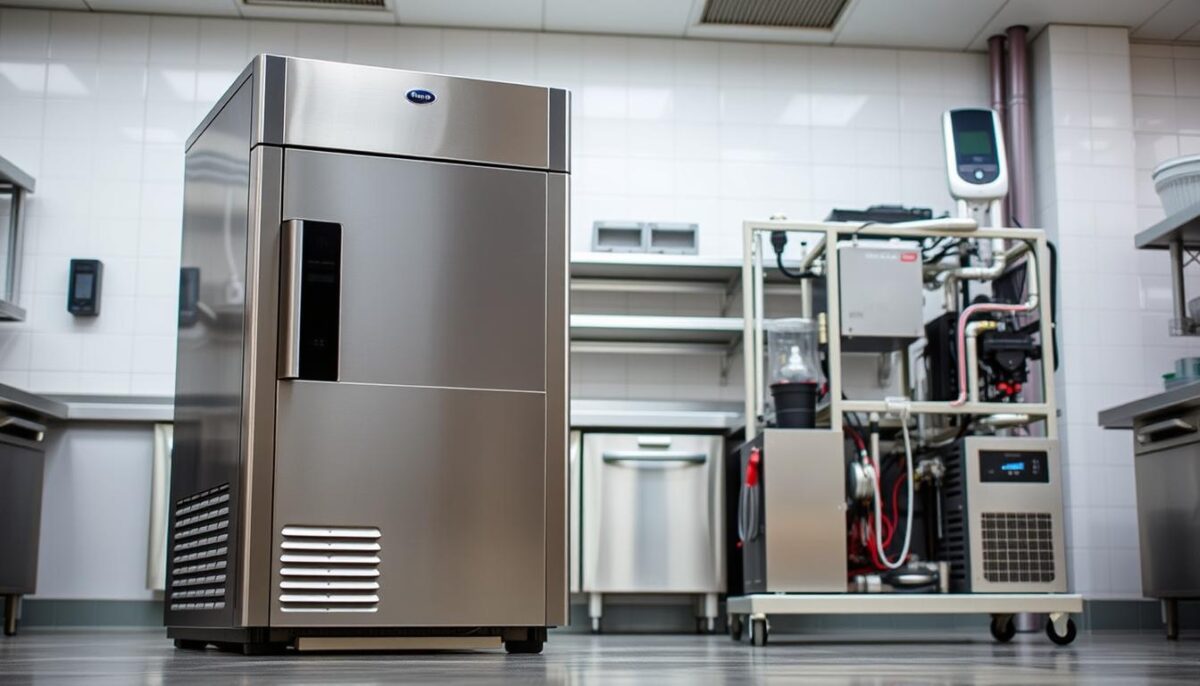
Imagine running a busy restaurant or bar, only to find your ice machines can’t keep up with demand. It’s a scenario many businesses face, and it can lead to lost sales and disappointed customers. Surprisingly, a significant number of establishments struggle with inadequate ice production, highlighting the importance of choosing the right equipment.
Selecting between a modular and self-contained ice machine depends on several factors, including production capacity, space, and specific business needs. Making the right choice can significantly impact operational efficiency and costs over time.
Key Takeaways
- Understand the key differences between modular and self-contained ice machines.
- Consider production capacity and space when making your choice.
- Assess your business needs to make an informed decision.
- Recognize how the right ice machine can impact operational costs.
- Evaluate the importance of choosing the right equipment for your business.
Understanding Ice Machine Types and Their Importance
For businesses reliant on ice, understanding the different types of ice machines is critical for making informed decisions. Ice machines are an integral part of commercial food service operations, ensuring efficiency and convenience.
What Makes Ice Machines Critical for Business Operations
Ice machines are considered essential equipment for various businesses, from restaurants and hotels to healthcare facilities. Consistent ice availability impacts customer satisfaction and operational efficiency in different business settings. Restaurants, for instance, need a steady ice supply to keep beverages chilled, while hospitals require ice for patient care.
Key Differences Between Modular and Self-Contained Units
Modular ice systems consist of separate components – an ice maker and a storage bin – whereas self-contained units are all-in-one solutions. These different designs serve different business requirements and operational scales. The choice between modular and self-contained ice machines affects not just ice production but also installation, maintenance, and long-term costs.
Understanding these differences is the first step in making an informed decision for your specific business needs. By considering factors such as ice production capacity and space requirements, businesses can choose the most suitable ice machine type.
Modular vs Self-Contained Ice Machine: Core Design Differences
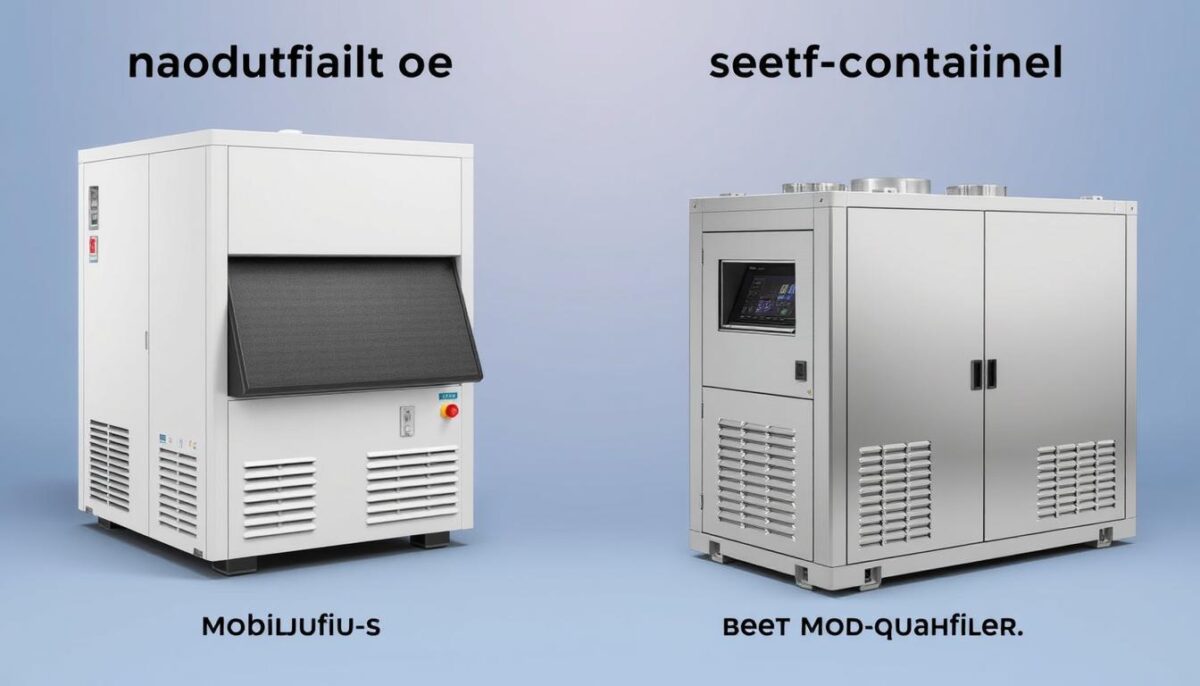
When deciding between modular and self-contained ice machines, understanding their core design differences is crucial. The design of these machines significantly impacts their functionality, efficiency, and suitability for various business applications.
Modular Ice Machines: Separate Components for Flexibility
Modular ice machines are designed with separate components, including the ice-making head and the storage bin. This modular design offers flexibility through mix-and-match components that can be selected based on specific production and storage needs.
The separate components of modular systems allow for strategic placement, with the ice maker potentially located away from the storage bin. This flexibility is beneficial for businesses with limited space or specific operational requirements.
Self-Contained Units: All-in-One Convenience
Self-contained ice machines, on the other hand, combine both the ice maker and storage bin in a single unit. This all-in-one design creates a smaller footprint but limits customization options.
The convenience factor of self-contained units lies in their being complete, ready-to-use systems that require minimal setup and configuration. However, this design means that when needs change, the entire unit typically needs to be replaced.
Ice Production Capacity: Meeting Your Volume Needs
To meet your volume needs, it’s essential to understand the ice production capacity of different machines. The right capacity ensures you have enough ice for your customers, even during peak periods.
Production Ranges for Modular Systems
Modular ice machines offer a wide range of production capacities, from 250 lbs to over 2,000 lbs of ice per day. This flexibility makes them suitable for large businesses or establishments with high ice demands.
Output Limitations of Self-Contained Units
In contrast, self-contained undercounter ice machines typically produce between 80 lbs to 750 lbs of ice per day. While they are more compact and suitable for smaller spaces, their production capacity is limited compared to modular systems.
When choosing an ice machine, consider factors like ambient temperature and water conditions, which can affect production capacity. It’s also crucial to assess your business’s peak demand periods to ensure the machine can meet your needs. A mismatch can lead to insufficient ice supply, impacting customer satisfaction.
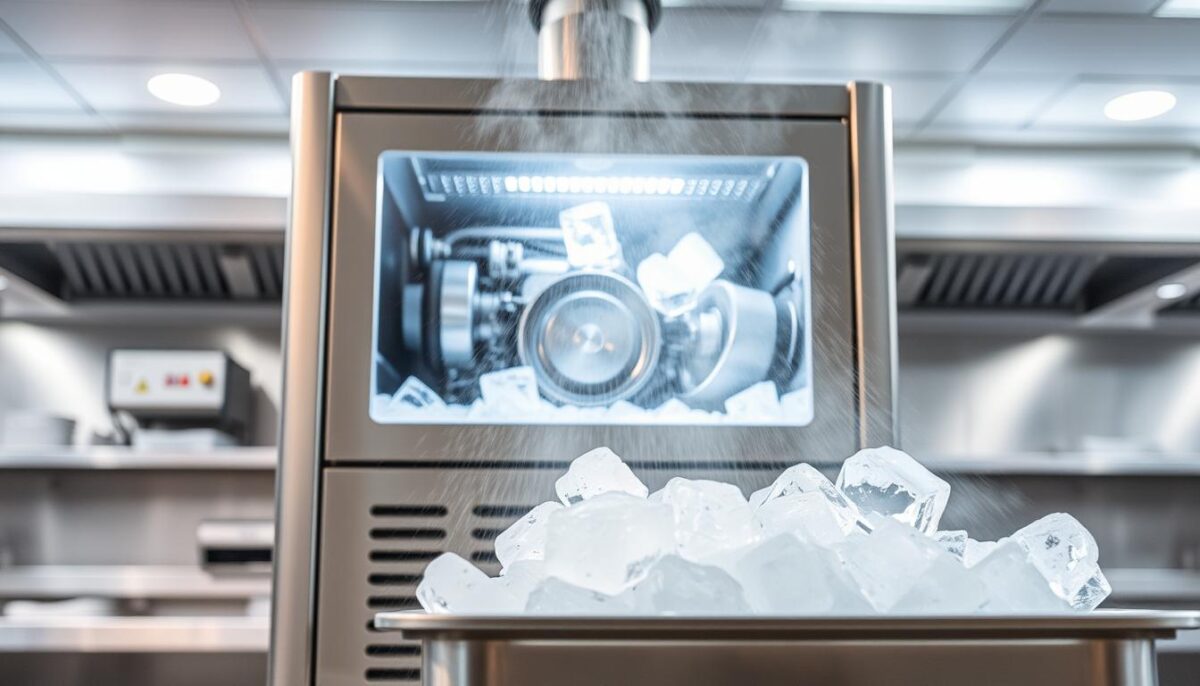
- Modular ice machines: 250-2000+ lbs/day
- Self-contained units: 80-750 lbs/day
By understanding these differences and assessing your business needs, you can select the right ice machine to meet your volume requirements.
Space Considerations and Installation Requirements
Selecting the right ice machine involves more than just production capacity; it requires careful consideration of space and installation needs. When evaluating your options, it’s crucial to understand the physical requirements and flexibility offered by both modular and self-contained ice machines.
Modular Systems: Flexible Placement with Larger Footprint
Modular ice machines offer flexible placement options, allowing you to position the ice maker and storage bin in different areas. However, they require more overall space and have specific installation requirements, including plumbing connections and ventilation needs.
Self-Contained Units: Compact Design for Limited Spaces
Self-contained ice machines are designed to be compact, making them ideal for establishments with limited space. They are typically installed under countertops or bars, requiring less clearance and simpler installation.
| Feature | Modular Ice Machines | Self-Contained Ice Machines |
|---|---|---|
| Space Requirements | Larger footprint, flexible placement | Compact, under-counter installation |
| Installation Complexity | More complex, requires plumbing and ventilation | Simpler, less demanding installation |
Cost Analysis: Upfront Investment vs Long-Term Value
The total cost of ownership for ice machines varies significantly between modular and self-contained units. While the initial cost of a modular cube ice machine system may be higher due to its separate components, its long-term cost-efficiency can be greater.
Initial Purchase Price
Modular ice machines typically have a higher upfront cost compared to self-contained units. For instance, a modular system can cost between $3,000 to $10,000 or more, depending on the capacity and features. In contrast, self-contained units are generally less expensive upfront, ranging from $1,500 to $6,000.
| Type | Initial Cost Range |
|---|---|
| Modular Ice Machines | $3,000 – $10,000+ |
| Self-Contained Units | $1,500 – $6,000 |
Operational Costs
Operational costs, including energy consumption, water usage, and maintenance, play a crucial role in the total cost of ownership. Modular systems, despite their higher initial cost, can offer significant long-term savings through their efficiency and scalability.
As noted by industry experts, “The key to minimizing long-term costs is to invest in energy-efficient equipment that meets your current needs while allowing for future expansion.”
To calculate the return on investment, consider factors such as production capacity, operational lifespan, and business growth projections. By doing so, you can make an informed decision that balances your budget constraints with long-term value.
Maintenance, Serviceability, and Operational Efficiency
The choice between modular and self-contained ice machines is not just about production capacity, but also about maintenance and operational efficiency. Understanding these aspects is crucial for businesses to minimize downtime and maximize their ice machine’s lifespan.
Modular Systems: Component-Based Maintenance
Modular ice machines offer a significant advantage when it comes to maintenance. Their design allows for the servicing or replacement of individual components without affecting the entire system. This modular approach reduces downtime and can lead to cost savings over time.
Self-Contained Units: Integrated Service Needs
In contrast, self-contained ice machines require a more integrated service approach. When a problem arises, it often necessitates shutting down the entire unit, potentially leading to longer periods of downtime. Routine maintenance for these units includes regular cleaning and sanitization, as well as preventive maintenance schedules to ensure optimal performance.
Energy and Water Efficiency Factors
Efficiency is another critical factor. Modular systems tend to be more energy-efficient, especially when paired with larger storage bins. Some modular units also feature advanced water-saving technologies, enhancing their overall operational efficiency. When choosing an ice machine, considering both energy and water efficiency can lead to significant savings.
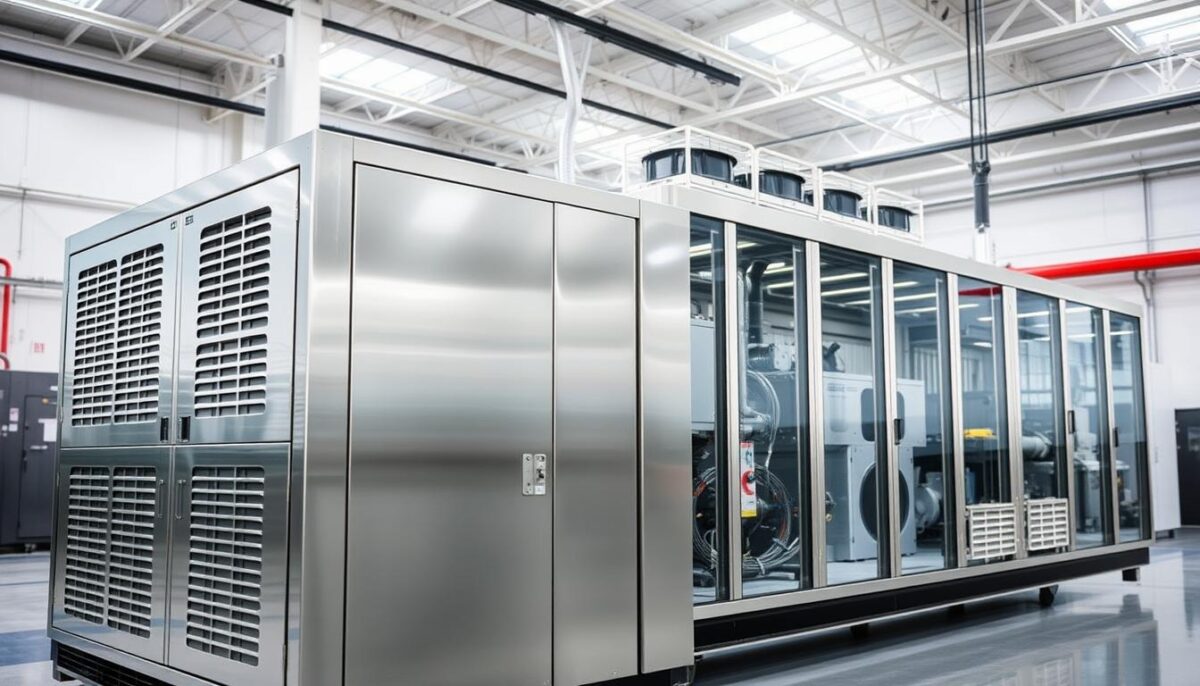
- Modular ice machines allow for component-based maintenance, reducing downtime.
- Self-contained units require integrated service, potentially leading to longer downtime.
- Energy and water efficiency vary between the two types, impacting operational costs.
Ideal Business Applications: Making the Right Choice
Businesses face a critical decision when choosing between modular and self-contained ice machines, with the right choice dependent on various operational factors.
Modular Ice Machines in High-Demand Environments
Modular ice machines are the preferred choice for high-volume operations such as large hotels, hospitals, and restaurants that require consistent, large quantities of ice.
High-Volume Operations
These businesses benefit from the scalability of modular systems, which can meet high ice demands during peak periods.
Businesses with Fluctuating Demand
Moreover, businesses with fluctuating demand can scale their ice production up or down as needed, making modular ice machines highly adaptable.
When Self-Contained Units Are More Suitable
In contrast, self-contained units are more practical for smaller businesses with lower ice production needs, such as cafes, bars, and small restaurants.
Small Establishments
These establishments often have limited space, making compact self-contained units the ideal choice despite their production limitations.
Businesses with Space Constraints
For businesses where space is a premium, self-contained units offer a viable solution, providing necessary ice production without requiring extensive space.
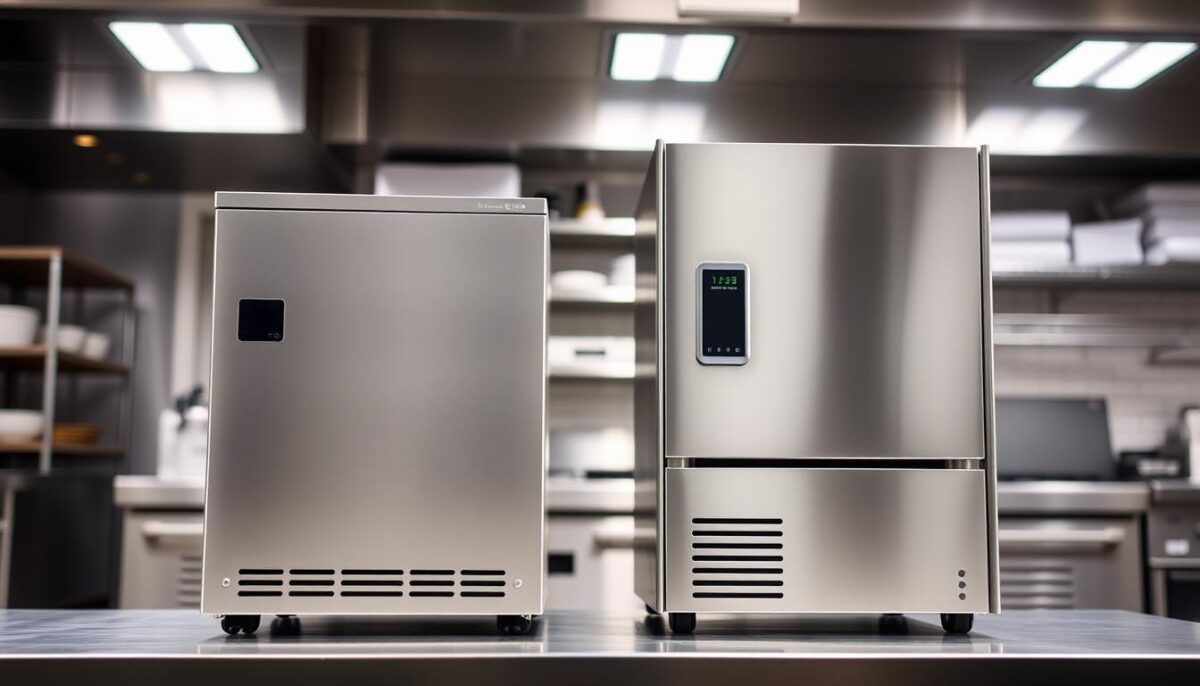
By understanding the strengths of each type, businesses can make informed decisions that meet their operational needs and scale.
Conclusion: Selecting the Right Ice Machine for Your Volume Needs
By understanding the core differences between modular and self-contained ice machines, businesses can make a more informed purchasing decision that meets their specific volume needs. When choosing an ice machine, it’s crucial to consider factors such as production capacity, space constraints, and long-term business plans. Modular ice machines offer greater flexibility and higher production capacities, making them ideal for growing or high-volume businesses. In contrast, self-contained units provide convenience and space efficiency, suiting smaller operations. Ultimately, the right choice depends on accurately assessing current and future ice production needs. Businesses should consider both immediate requirements and long-term plans when investing in ice machine equipment.
To summarize, the key to selecting the right ice machine lies in understanding the differences between modular and self-contained units and how they relate to your business needs. By doing so, you can ensure that your ice machine investment supports your business operations effectively.
FAQ
What are the key differences between modular and self-contained ice production units?
The primary difference lies in their design and functionality. Modular units have separate components, offering flexibility in installation and maintenance, whereas self-contained units are all-in-one systems that are more compact but less flexible.
How do I determine the right ice production capacity for my business?
To determine the right capacity, consider your daily ice needs, available space, and budget. Modular systems can produce between 250-2000+ lbs/day, while self-contained units typically range from 80-750 lbs/day.
What are the advantages of modular ice machines in terms of maintenance and serviceability?
Modular systems allow for component-based maintenance, making it easier to replace or repair individual parts, reducing downtime and costs.
Are self-contained ice machines more energy-efficient than modular units?
Not necessarily. While self-contained units are designed to be compact, their energy efficiency depends on various factors, including the model and usage. It’s essential to check the energy ratings and compare them when making a decision.
Can I install a modular ice machine in a small space?
While modular systems offer flexibility, they generally require more space due to their separate components. However, the components can be arranged to fit the available space, making it a viable option for businesses with larger areas or those willing to optimize their layout.
What are the typical upfront costs associated with modular and self-contained ice machines?
The initial purchase price of modular systems is often higher than self-contained units, but the long-term value and flexibility of modular systems can offset the higher upfront cost.
How do I choose between a modular and self-contained ice machine for my business?
Consider your business’s specific needs, including ice production requirements, available space, budget, and maintenance preferences, to make an informed decision.