


4 Common Issues Restaurants Report About Gordon Food Service
October 21, 2025
5 Common US Foods Issues—and What You Can Do About Them
October 22, 2025

As a restaurant owner, choosing the right food distributor can be a daunting task. I recall a conversation with a chef who struggled to find a reliable supplier, resulting in inconsistent food quality and frustrated customers. Did you know that the foodservice distribution industry is dominated by just three major players: Sysco, US Foods, and Performance Food Group (PFG), with combined annual revenues of over $152 billion?
This concentration of market share raises important questions about the impact on restaurants like yours. With so much at stake, it’s crucial to understand how these distributors compare in terms of quality, service, and overall value. So, what do restaurant owners and chefs really think about these industry giants?
Key Takeaways
- Comparison of product quality among PFG, Sysco, and US Foods
- Service reliability and its impact on restaurant operations
- Pricing structures and their effect on profitability
- Technology offerings that can streamline your supply chain
- Real-world feedback from restaurant owners and chefs
The Big Three of Food Distribution in America
For restaurants across America, the choice of food distributor often comes down to one of three major companies: Sysco, US Foods, and Performance Food Group (PFG). These industry giants play a crucial role in the food service industry, providing a wide range of products that cater to diverse culinary needs.
Market Position and Reach
The big three food distributors have established themselves as leaders in the industry, with an extensive network that covers a significant portion of the American market. Sysco, for instance, is renowned for its broad customer base and comprehensive product offerings. US Foods and PFG also have a substantial presence, with a strong focus on innovation and customer service.
These distributors are crucial for restaurants as they provide everything from fresh produce and meat to specialty items and imported goods. Their reliability directly impacts a restaurant’s ability to maintain consistent menu offerings and quality standards.
Why These Distributors Matter to Restaurants
Your choice of food service distributor is critical to your restaurant’s daily operations and long-term success. A reliable distributor becomes an essential business partner, affecting everything from food costs and menu planning to delivery schedules and inventory management.
- Reliability and Consistency: Consistency in delivery times and product quality directly affects a restaurant’s ability to plan effectively and maintain standards.
- Access to Specialty Products: The right distributor relationship can give restaurants access to specialty products, volume discounts, and technology tools that might otherwise be unavailable.
- Impact on Service and Quality: When a distributor excels, they become an invisible force supporting the restaurant; when they falter, the problems immediately impact service, quality, and the bottom line.
By understanding the market position and reach of these major distributors, restaurants can make informed decisions about their food distribution needs.
Company Profiles: Getting to Know the Giants
The food distribution landscape is dominated by three key players: Sysco, US Foods, and Performance Food Group. Understanding their strengths and strategies is essential for restaurants to make informed decisions about their food supply chain.
Sysco Corporation: The Industry Leader
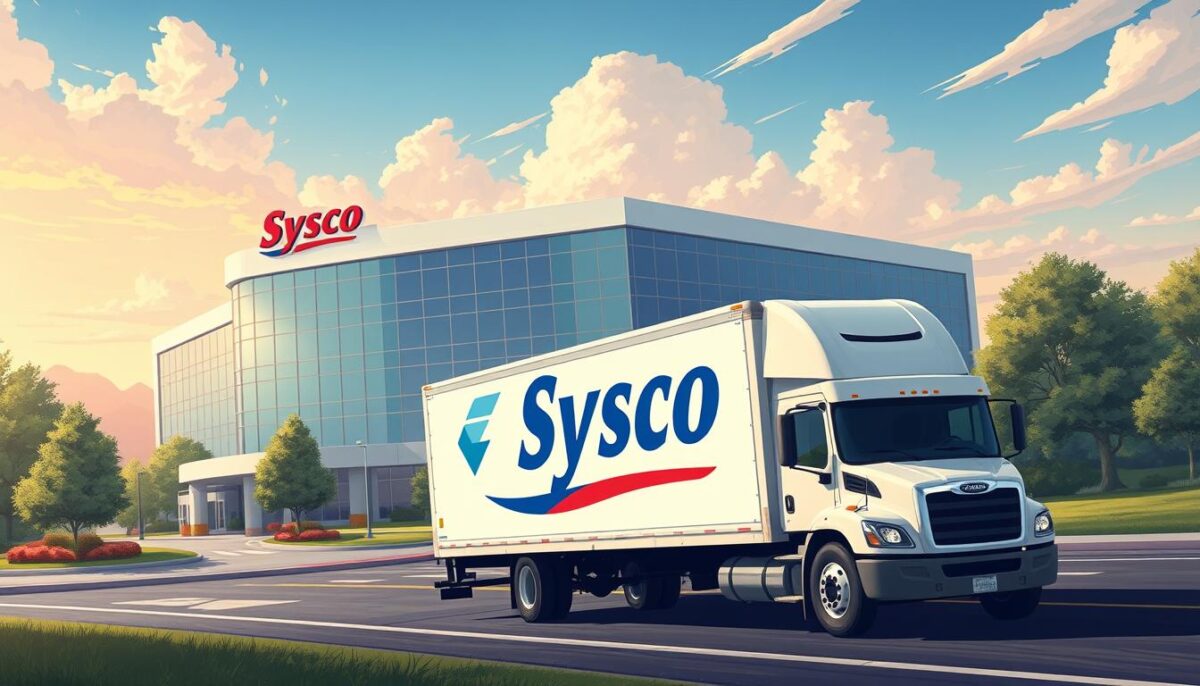
Sysco Corporation is the largest food distribution company in the United States, renowned for its extensive network and wide range of products. With a strong presence in the market, Sysco has established itself as a leader in food service distribution, serving a vast customer base across the country.
US Foods: The Innovative Challenger
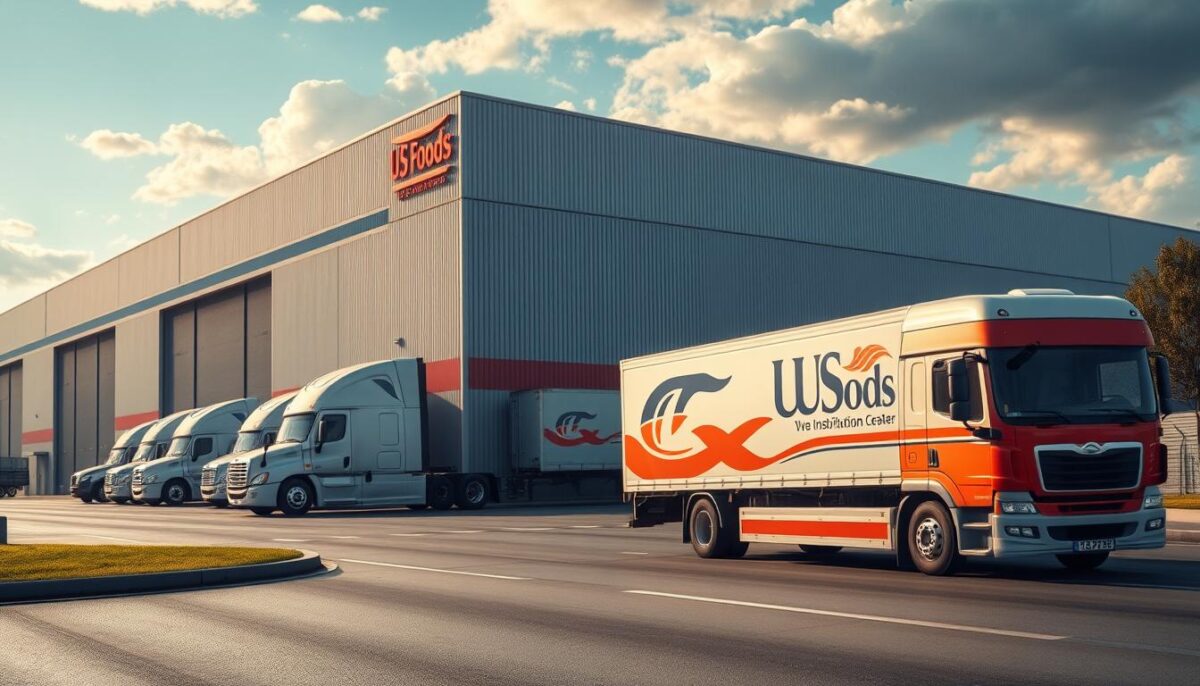
US Foods is a significant competitor to Sysco, known for its innovative approach to food distribution. The company has been investing in technology and logistics to improve its services, making it a formidable challenger in the industry.
Performance Food Group (PFG): The Rising Contender
Performance Food Group, founded in 1885, has grown to become one of the largest food distributors in the USA, with annual revenue of $56.7 billion. Based in Richmond, Virginia, PFG serves 300,000 customers across all 50 states through over 150 distribution centers. The company specializes in custom solutions tailored to their clients’ needs.
Some key aspects of PFG’s strategy include maintaining regional strengths while expanding their national footprint, allowing them to combine local market knowledge with large-scale purchasing power. They operate through several specialized divisions, including Performance Foodservice, Vistar, and PFG Customized, each targeting different segments of the food industry.
Product Quality Comparison: What Restaurants Report
Restaurants demand high-quality products from their distributors, and Sysco, US Foods, and PFG are no exception. The quality of food products is a critical factor in a restaurant’s success, influencing customer satisfaction and loyalty.
Fresh Produce Standards
Fresh produce is a staple in any restaurant kitchen, and its quality can significantly impact the dining experience. Sysco is often praised for its consistent produce quality, with many customers noting that their fruits and vegetables are always fresh. US Foods also receives positive reviews for its produce, particularly for its variety and seasonal offerings. PFG’s produce quality is more variable, depending on the region, but they have been working to improve their standards.
Meat and Seafood Quality
Meat and seafood are crucial components of many restaurant menus, and their quality is closely scrutinized. US Foods is known for its high-quality meats, with a focus on sustainable and humanely sourced products. Sysco also offers a wide range of meat and seafood options, with many customers appreciating their reliability. PFG has made significant strides in improving their meat and seafood offerings, particularly in certain regions where they have strong local suppliers.
“The quality of the meat and seafood we receive from our distributors directly affects our reputation and customer satisfaction.”
Specialty and Imported Items
Access to specialty and imported items is becoming increasingly important as restaurants look to differentiate their menus and cater to more sophisticated customer preferences. Sysco has leveraged its international presence to develop strong import channels, making them particularly strong in European specialty items and imported cheeses. US Foods has focused on developing relationships with artisanal producers, giving them an edge in domestic specialty items. PFG’s strength in specialty items varies significantly by region, with some divisions offering exceptional access to local and regional specialty products.
In conclusion, while all three distributors have their strengths and weaknesses in terms of product quality, they have all made efforts to improve their offerings. As a restaurant owner, understanding these differences is crucial in choosing the right company to meet your needs.
Service Excellence: Delivery Reliability and Consistency
In the competitive world of food distribution, companies like Sysco, US Foods, and PFG are judged not just on their product offerings, but on their ability to deliver those products on time and in the right condition. For restaurants, the quality of service provided by food distributors can significantly impact their daily operations and customer satisfaction.
On-Time Delivery Performance
One of the critical aspects of service excellence is on-time delivery performance. Restaurants rely heavily on their distributors to deliver products when they are needed. Sysco, being one of the largest distributors, has a vast network that generally allows for reliable delivery schedules. However, some restaurant owners have noted that Sysco’s size can sometimes lead to delays due to their complex logistics. US Foods and PFG have also made significant strides in improving their on-time delivery rates, with many customers praising their reliability. According to a survey, US Foods has been particularly successful in maintaining a high on-time delivery rate, which is crucial for restaurants that rely on just-in-time inventory management.
Order Accuracy Rates
Another vital component of service excellence is order accuracy. All three distributors have implemented various measures to ensure that orders are fulfilled correctly. PFG, for instance, has been praised for its meticulous approach to order processing, resulting in high accuracy rates. US Foods has also invested heavily in technology to improve order accuracy, with their mobile app allowing for real-time tracking and updates. Sysco, while generally reliable, has faced some challenges in this area, with a few restaurant owners reporting occasional discrepancies in their orders.
Problem Resolution Processes
Even with the best systems in place, issues can arise, and how a company resolves these problems is crucial. As one restaurant owner put it, “How a distributor handles problems when they inevitably occur tells you more about their service quality than when everything goes smoothly.” US Foods receives generally positive reviews for their customer service response time, with dedicated account representatives being particularly responsive. PFG is also praised for its personalized approach to problem resolution, with local representatives having more authority to make immediate decisions. For example, when choosing a fresh produce supplier, understanding their problem resolution process can be as important as their product quality, as discussed in our article on choosing fresh produce suppliers.
PFG vs Sysco vs US Foods: Pricing Structures and Value
The cost of doing business with foodservice distributors like PFG, Sysco, and US Foods goes beyond just product prices. When evaluating these companies, restaurant owners must consider the overall value they bring to the table, including their pricing structures and additional fees.
Contract Terms and Volume Discounts
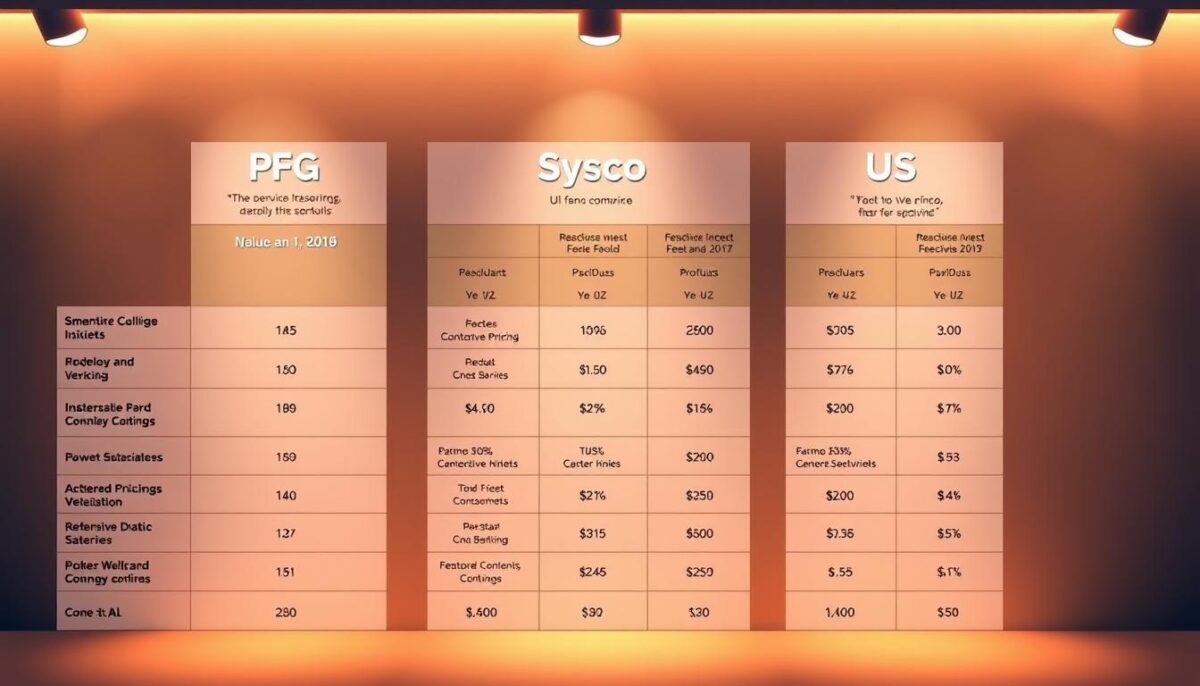
Contract terms and volume discounts can significantly impact a restaurant’s bottom line. Sysco is known for offering competitive volume discounts to large chain restaurants, while PFG has been gaining ground by offering flexible contract terms that cater to smaller operations. US Foods, on the other hand, has been praised for its transparent pricing and the absence of hidden fees in their contracts. Here are some key points to consider:
- Sysco: Offers significant volume discounts, but contract terms can be rigid.
- PFG: Provides flexible contract terms and is more accommodating to smaller restaurants.
- US Foods: Known for transparent pricing and fewer hidden fees.
Hidden Costs and Fees
Beyond base pricing, distributors may charge various fees for fuel, delivery, emergency orders, or order minimums. Understanding these additional costs is crucial for accurate budget planning. Some key observations from restaurant owners include:
- Sysco’s fuel surcharges and delivery fees have been increasing, with some fluctuations.
- US Foods generally receives better reviews for transparency in their fee structures.
- PFG’s fee structures vary by region, with some divisions charging separate delivery fees.
- All three companies have minimum order requirements that can result in additional fees.
By carefully examining the pricing structures and additional costs associated with PFG, Sysco, and US Foods, restaurant owners can make informed decisions that best suit their business needs.
Technology and Ordering Systems
In my examination of the food distribution landscape, I’ve found that technology plays a crucial role in enhancing ordering processes. The way a company leverages technology can significantly impact its efficiency and customer satisfaction.
Online Ordering Platforms
Online ordering platforms have become a staple for restaurants interacting with food distributors. Sysco, US Foods, and Performance Food Group (PFG) all offer robust platforms, but with varying degrees of user-friendliness. For instance, US Foods’ platform is often praised for its intuitive interface, making it easier for restaurant staff to place orders accurately and efficiently.
Inventory Management Tools
Effective inventory management is critical for restaurants to minimize waste and ensure they have the necessary ingredients. The distributors under review offer different inventory management tools, with some providing more detailed analytics than others. For example, PFG has made significant strides in recent years by incorporating barcode scanning into their mobile app, streamlining the inventory process.
Mobile App Functionality
Mobile apps have become increasingly important for busy restaurant operators who need to manage orders on the go. The functionality and reliability of these apps vary among distributors. US Foods’ “US Foods Direct” mobile app consistently receives strong reviews for its reliability and intuitive interface. A comparison of the mobile app functionalities is presented in the table below:
| Distributor | Mobile App Features | Reliability |
|---|---|---|
| Sysco | Comprehensive ordering, delivery tracking | Frequent crashes reported |
| US Foods | Intuitive interface, real-time tracking | Highly reliable |
| PFG | Barcode scanning, reordering | Improved reliability over time |
Over the years, these distributors have invested significant time in developing their technological capabilities, including their warehouse management systems, to better serve their customers.
Regional Strengths and Market Coverage
Understanding regional strengths and market coverage is vital for restaurants seeking to optimize their supply chain and improve overall efficiency. The food distribution landscape is characterized by a mix of national and regional players, each with their unique advantages.
Geographic Distribution Networks
The size and scope of a distributor’s geographic network can significantly impact their ability to serve restaurants effectively. Sysco, for instance, boasts an extensive national supply chain that enables them to offer consistent product availability across the country. In contrast, regional distributors like PFG may focus on specific areas, such as the Eastern United States, where they can maintain stronger relationships with local producers.
A company’s warehouse size and distribution capacity also play a crucial role in determining their regional strength. A larger warehouse can store a wider variety of products, making it easier for restaurants to source everything they need from a single supplier.
Local vs. National Supply Chain Advantages
Local and national supply chains offer different benefits to restaurants. National distributors like Sysco may provide a broader product selection and consistent availability, while regional operations might offer fresher local products or more personalized service. US Foods has attempted to bridge this gap with their “Serve Local” program, which incorporates local producers into their national distribution network.
- Regional focus allows companies like PFG to maintain stronger relationships with local producers, particularly in their original Eastern markets.
- National coverage provides restaurants with access to a wider range of products and more consistent availability.
- Hybrid approach is increasingly being adopted by restaurant owners, who rely on national distributors for staples while developing direct relationships with local producers for signature ingredients.
By understanding the regional strengths and market coverage of different distributors, restaurants can make informed decisions about their supply chain and optimize their operations for success.
Restaurant Owner Testimonials: Real-World Experiences
As a seasoned observer of the food industry, I’ve gathered testimonials from restaurant owners to shed light on their experiences with major food distributors. Their insights provide a unique perspective on the strengths and weaknesses of PFG, Sysco, and US Foods.
Small Independent Restaurant Perspectives
Owners of small independent restaurants often praise PFG for its personalized service and flexibility. “PFG has been a game-changer for us,” says one owner. “They understand our needs and deliver quality products consistently.” Sysco is also commended for its wide product range, though some note that the quality can be inconsistent. US Foods receives accolades for its culinary support programs, which help small restaurants innovate their menus.
| Distributor | Strengths | Weaknesses |
|---|---|---|
| PFG | Personalized service, flexible ordering | Limited regional coverage |
| Sysco | Wide product range, established reputation | Inconsistent quality, higher costs |
| US Foods | Culinary support programs, innovative products | Limited specialty items |
Chain Restaurant Experiences
Chain restaurants have different needs, often prioritizing consistency and reliability. “Sysco’s nationwide coverage is invaluable to us,” notes a chain restaurant manager. “Their ability to deliver on time, every time, is crucial for our operations.” PFG is also appreciated for its willingness to customize orders for large chains, while US Foods is recognized for its competitive pricing and promotional support.
“The relationship we have with our food distributor is crucial. It’s not just about the products; it’s about the service and support we receive.” – Restaurant Owner
Chef Preferences and Insights
Chefs emphasize the importance of quality and consistency in food products. “I’ve worked with all three distributors,” says an executive chef. “While Sysco offers a broad selection, US Foods’ culinary programs help us stay ahead of trends.” PFG is praised for its ability to source specific items upon request, catering to the unique needs of chefs.
Overall, the testimonials highlight the diverse strengths of PFG, Sysco, and US Foods. By understanding these real-world experiences, restaurant owners can make informed decisions about their food distribution needs.
Conclusion: Choosing the Right Distributor for Your Restaurant
After examining the strengths and weaknesses of PFG, Sysco, and US Foods, it’s clear that the best distributor for your restaurant depends on several factors, including product quality, service reliability, and pricing.
I believe there’s no one-size-fits-all answer to which distributor is “best”—your ideal partner depends on your restaurant’s specific needs, location, size, and priorities. For instance, larger operations often prefer Sysco for its national consistency and comprehensive product selection, while mid-sized restaurants might find US Foods more appealing due to its competitive pricing and strong technology platforms.
Small independent restaurants, particularly those focused on local and specialty ingredients, often report satisfaction with PFG’s flexible approach. Many successful restaurants work with multiple distributors to leverage each company’s strengths. Regardless of your choice, building strong relationships with sales representatives and regularly reviewing contract terms are essential for getting the best service and value in the foodservice industry.
FAQ
What are the key differences between Performance Food Group, Sysco, and US Foods?
The main differences lie in their market position, product quality, service excellence, and regional strengths. Each company has its unique strengths and weaknesses, catering to different restaurant needs.
How do these food distributors ensure the quality of their products?
They maintain high standards by sourcing products from reputable suppliers, implementing rigorous quality control measures, and adhering to food safety regulations. For instance, they prioritize fresh produce standards and meat and seafood quality.
What factors should restaurants consider when choosing a food distributor?
Restaurants should consider factors such as product quality, delivery reliability, pricing structures, and technology and ordering systems. They should also assess the distributor’s regional strengths and market coverage.
How do these distributors handle large orders and excess shipments?
They have systems in place to manage large orders, including experienced driver posts and warehousing capabilities. For example, they can handle shipments over 10,000 pounds and have otr driving (over-the-road driving) capabilities to ensure timely delivery.
What kind of support do these distributors offer to their customers?
They provide various forms of support, including customer service, inventory management tools, and mobile app functionality. This enables customers to efficiently manage their orders and inventory.
How do Performance Food Group, Sysco, and US Foods comply with food safety regulations?
They adhere to strict food safety regulations and guidelines to ensure compliance. This includes maintaining proper food handling and storage procedures to prevent contamination and spoilage.
Can these distributors cater to the needs of small independent restaurants?
Yes, they can cater to the needs of small independent restaurants by offering flexible contract terms and volume discounts. They also provide personalized service to meet the unique needs of these restaurants.