


How to Experience the Flavor Explosion of Manila’s Street Markets
June 12, 2025
Top Things to Eat in Cape Town for a Flavorful South African Journey
June 13, 2025

Did you know 90% of visitors to Belgium prioritize tasting its iconic trio of waffles, chocolate, and beer? I discovered why during my first trip, when a local chef handed me a golden waffle drizzled with dark chocolate and said, “Now take a sip of ale—it’s like unlocking a secret flavor level.” That moment changed how I saw food forever.
Belgian cuisine isn’t just about eating—it’s a craft passed down for centuries. From the airy texture of Liege-style waffles to the rich foam on a Trappist beer, every detail matters. I’ve spent years exploring workshops across Flanders, learning how bakers perfect their batter and brewers balance bitter and sweet notes.
What makes this combo unforgettable? It’s the harmony of crispy waffles, velvety chocolate, and effervescent beer that dances on your tongue. Locals treat these pairings like art, and after one bite, you’ll understand why. Trust me: this isn’t just a meal—it’s a story you’ll crave retelling.
Key Takeaways
- Belgium’s waffle, chocolate, and beer trio offers a unique flavor synergy you won’t find elsewhere.
- Authentic techniques, like slow-fermented batter, elevate these dishes beyond typical street food.
- Many local workshops let you create your own pairings with expert guidance.
- Balancing textures (crispy vs. creamy) is key to the perfect bite-and-sip experience.
- Seasonal ingredients often inspire limited-time menu items at top eateries.
Exploring Brussels’ Iconic Food Culture
My first encounter with Belgium’s culinary soul happened in a tucked-away bakery, where flour-dusted hands shaped dough into golden masterpieces. The baker grinned as he explained, “We measure time here in yeast bubbles and chocolate melts.” That’s when I realized these flavors weren’t just snacks—they were heirlooms.
Tradition in Every Bite
I watched a fourth-generation chocolatier temper cocoa like her ancestors, her motions mirroring century-old sketches on the workshop wall. Nearby, a brewer described how his ale recipe evolved from medieval monastery records. Pairing his citrus-forward brew with a caramel-drenched belgian waffle felt like tasting history.
Secrets of the Side Streets
Beyond Grand Place, I found family-run spots where batter rests overnight in oak bowls. One shopkeeper revealed her trick: “Pearl sugar needs time to melt into pockets of joy.” Her waffles beer pairing used a spiced saison that cut through the sweetness perfectly.
| Element | Traditional Method | Cultural Significance |
|---|---|---|
| Batter | 24-hour fermentation | Mirrors Belgium’s slow food ethos |
| Chocolate | Stone-grinding | Ties to Congo trade history |
| Beer Yeast | Reused for decades | Symbolizes generational knowledge |
By day’s end, I’d learned that every crispy edge and frothy sip whispers stories of resilience and pride. You don’t just eat here—you commune with ghosts of bakers past.
Brussels Waffle Beer Combo: A Hands-On How-To Guide
The scent of caramelizing sugar and yeast hit me the moment I stepped into a Bruges kitchen workshop. A chef handed me a whisk and said, “Good batter breathes—let it tell you when it’s ready.” Here’s how to recreate that magic at home.
Mastering the Batter and Beer Infusion
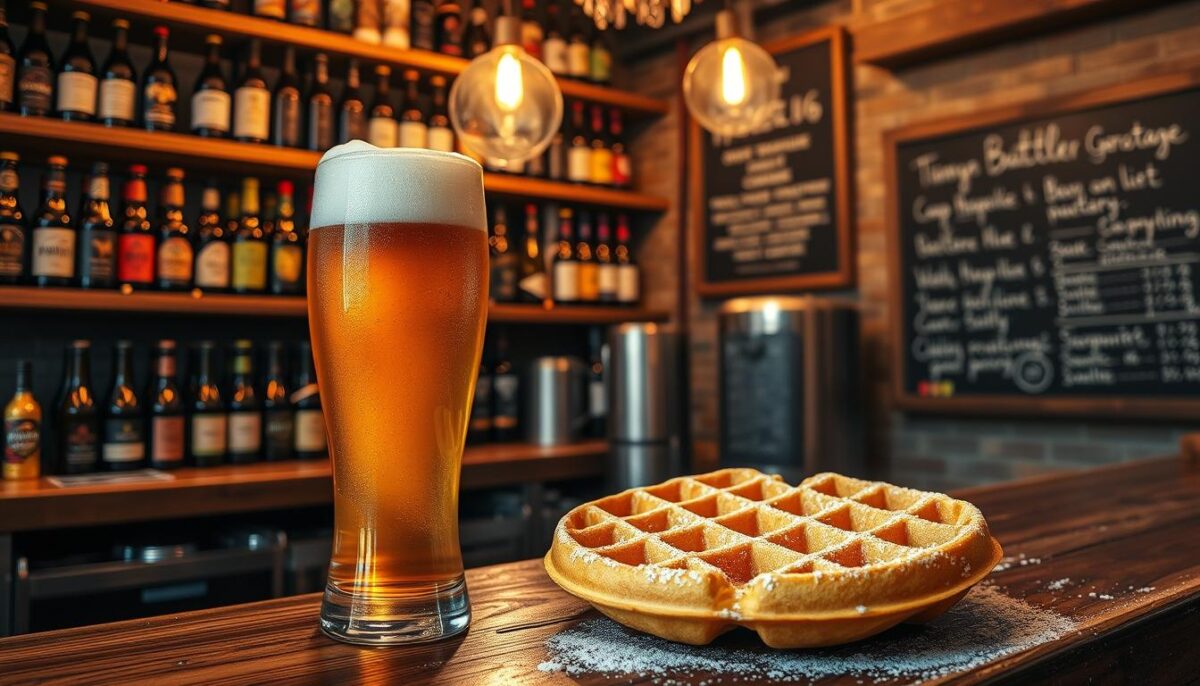
Start with chilled butter and room-temperature eggs—this temperature contrast creates air pockets for fluffiness. I learned to fold the dry ingredients into wet ones gently, like turning pages in an old book. For every cup of flour, swap two tablespoons with your favorite Belgian ale. The carbonation lifts the texture, while malt notes deepen the flavor.
Techniques for Perfect Caramelization with Pearl Sugar
Pearl sugar isn’t just decorative. Press chunks into the batter after pouring it onto the iron—this prevents burning. Wait until edges turn honey-gold before peeking. “Listen for the crackle,” a Ghent baker once advised me. That crisp sound means sugars have melted into glass-like shards without bitterness.
Timing matters more than precision. Kids love sprinkling sugar, while adults appreciate adjusting beer types for bolder tastes. Whether you’re 12 or 60, the joy comes from watching steam rise as history transforms into edible art.
Insider Reviews and Real Experiences
What surprised me most wasn’t the flavors—it was the laughter echoing through every workshop. Visitors’ eyes light up when they realize food here isn’t just eaten; it’s lived.
Voices from the Tasting Tables
One guest shared: “Laurent made us taste beer like wine—swirling, sniffing, savoring. Who knew ale could have notes of apricot?” Their group still exchanges recipes via email, with strict adherence to the workshop’s privacy policy.
Michelle’s chocolate pairing demo turned skeptics into believers. “She matched stout with white chocolate—sounded wild, tasted divine,” wrote a Texas food blogger. These moments transform meals into memories.
Workshop Wonders Unveiled
Stephen’s batter-mixing ritual became legendary after a family’s viral TikTok video. His secret? “Let the dough dream overnight.” Participants rave about the textured experience—crispy edges meeting velvety cocoa in rhythm with fizzy sips.
| Host | Specialty | Participant Feedback |
|---|---|---|
| Laurent | Beer tasting flights | “Revealed hidden citrus undertones” |
| Michelle | Chocolate texture pairing | “Changed how I perceive sweetness” |
| Stephen | Fermentation techniques | “Made science taste delicious” |
Many leave clutching recipe cards and new email subscriptions. The best part? These immersive sessions often fit into a single day. As one couple noted: “We arrived as tourists, left as temporary locals.”
Want these adventures delivered weekly? Most workshops offer newsletters featuring seasonal food pairings. Just check their privacy policy before signing up—your inbox will thank you.
Conclusion
The clink of a beer glass against a chocolate-dusted plate still echoes in my food memories. Through workshops and shared stories, I’ve learned that Belgium’s iconic trio isn’t just a meal—it’s a cultural experience shaped by patience and pride.
Mastering the 24-hour fermentation technique or achieving that glass-like sugar crunch takes practice, but the reward is pure magic. What surprised me most? How travelers’ tales—from Texas bloggers to TikTok families—revealed new “flavor dimensions” in every bite.
This edible tradition thrives because it’s an accessible experience for all. Whether you’re recreating recipes at home or joining a tasting session, the joy lies in the process. Crispy edges meet velvety toppings, while effervescent sips elevate each mouthful.
Ready to craft your own story? Grab a whisk, pick a local ale, and let the batter breathe. The best way to honor this legacy? Share it with someone—because golden moments taste better together.
Every bite invites discovery. What memories will your next culinary adventure create?
FAQ
What makes Belgian waffles unique compared to other styles?
I love how they use yeast in the batter for a lighter texture. The secret? Pearl sugar caramelizes while baking, creating that crispy exterior. It’s a tradition that’s been perfected over centuries!
How does adding beer to the batter change the flavor?
Beer adds depth with malty or fruity notes, depending on the brew. I’ve found lighter ales work best—they give the dough a subtle tang and help it rise without overpowering the sweetness.
Where can I experience authentic local food culture in Brussels?
Head to neighborhoods like Sainte-Catherine or Marolles. I still dream about the tiny chocolatiers near Grand Place and family-run breweries that pair aged Trappist beers with fresh, warm waffles.
Can I make this combo at home without professional tools?
Absolutely! My go-to hack is using a basic iron and pre-made dough if you’re short on time. Swap pearl sugar with crushed sugar cubes, and pick a wheat beer for the batter—it’s forgiving for first-timers.
When’s the best time to visit for food festivals or events?
Spring and fall are magical. The city hosts chocolate fairs in March and Oktoberfest-inspired events. Weekdays are quieter, so you’ll avoid crowds while exploring markets or tasting rooms.
Are workshops worth it for someone new to Belgian cooking?
100%! I’ve joined a few where experts guide you step-by-step. You’ll learn tricks like timing the caramelization just right and which aged brews complement dark chocolate. Plus, you get to eat your creations afterward!