


How to Optimize Your Restaurant’s Google My Business and Rank #1 Locally
October 28, 2025
Common budget mistakes when launching a new restaurant
October 28, 2025

Starting a restaurant business is a dream for many, but the financial reality can be daunting. I recall a restaurant owner in Chicago who budgeted for his restaurant space, only to find his initial setup costs were significantly higher than expected.
It’s a common tale; most first-time restaurateurs underestimate their startup budget by 25-35%, leading to financial stress before they even serve their first customer. The truth is, the expenses involved in opening a restaurant are often more than anticipated.
As someone who has witnessed too many passionate food entrepreneurs fail due to inadequate financial planning, I’m here to provide the unfiltered truth about the real costs involved in opening a restaurant in 2025.
Key Takeaways
- Understanding the true startup costs for a restaurant business.
- Breaking down every expense category you’ll encounter.
- Learning from the mistakes of underestimating startup budget.
- Creating a comprehensive financial roadmap for your restaurant.
- Entering the industry with a realistic financial plan.
The Reality Behind Restaurant Startup Expenses
The harsh reality of starting a restaurant involves more than just the initial investment in equipment and décor. Many new restaurant owners are caught off guard by the true costs associated with launching a successful business.
I’ve observed that first-time restaurant owners typically focus on visible costs like equipment and location, while overlooking critical hidden expenses. Many new restaurateurs base their budgets on outdated information or best-case scenarios, failing to account for inflation and regional cost variations that significantly impact startup expenses in 2025.
Budget Underestimation: A Common Pitfall
Several factors contribute to the underestimation of costs when starting a restaurant. These include:
- Optimism bias, where owners convince themselves they can open for less than industry averages.
- Permit and licensing delays that force owners to pay rent and utilities before generating revenue.
- Construction projects exceeding initial estimates by 15-30%, creating immediate budget shortfalls.
- Inadequate accounting for pre-opening expenses like staff training and initial marketing campaigns.
To avoid these pitfalls, it’s crucial for restaurant owners to develop a comprehensive financial plan that accounts for both visible and hidden costs, ensuring sufficient reserves to weather the challenges of the first 12-18 months.
The Complete Cost to Open a Restaurant in 2025
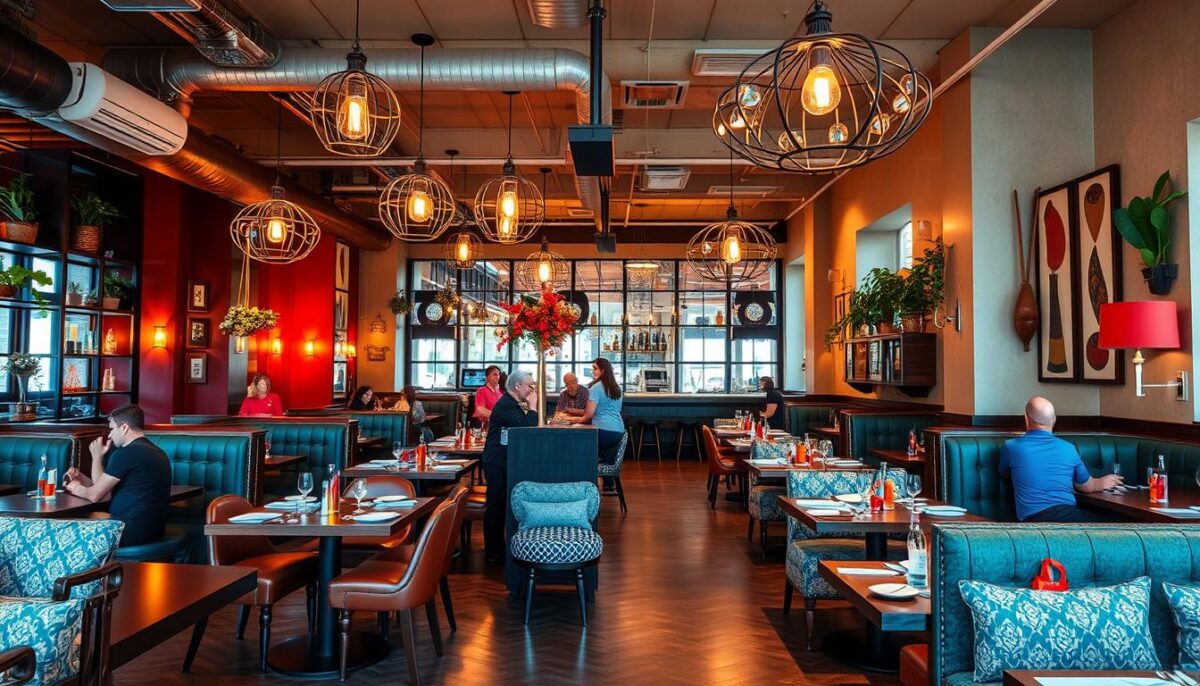
Understanding the complete cost to open a restaurant in 2025 is crucial for new owners. The total expense varies greatly based on the type, location, and size of the restaurant.
The average restaurant startup cost includes various elements such as construction, equipment, furnishings, and initial operational expenses. According to Sage Accounting, whether you lease or own the space significantly affects your startup costs. Smaller restaurants generally require less financial outlay but still command significant funds, as noted by Lightspeed.
Cost Ranges by Restaurant Type and Size
The cost to open a restaurant in 2025 differs significantly across various types and sizes of establishments. Here are some key cost ranges to consider:
- Fine dining establishments: $750,000 – $1.5 million
- Casual dining: $350,000 – $750,000
- Quick-service concepts: $175,000 – $350,000
The size of your restaurant dramatically impacts your startup costs, with each square foot adding to your initial investment. Location quality also significantly affects both your startup and ongoing costs. Prime urban locations command premium prices but may deliver higher customer traffic and revenue.
Your concept’s complexity directly correlates with your equipment needs and kitchen setup costs. Specialized cuisine often requires custom or specialized equipment, increasing your initial investment. The restaurant format, whether traditional dining, fast casual, ghost kitchen, or food truck, creates vast differences in startup requirements. Alternative models like ghost kitchens can reduce initial costs by up to 75% compared to traditional restaurants.
Understanding these cost ranges helps you make informed decisions about which restaurant concept aligns with your available capital and financial goals. Most successful restaurants in 2025 require not just funding for startup costs but also 6-12 months of operating capital to ensure survival through the challenging initial period.
Location and Real Estate Expenses
When it comes to opening a restaurant, one of the most critical decisions is choosing the right location, as it directly impacts real estate expenses. The cost of real estate varies significantly depending on the location, with urban settings typically having higher expenses than rural areas.
The type of restaurant and whether the project utilizes new or existing space also play crucial roles in determining building costs. Understanding these cost differences is essential for budding restaurateurs to set realistic budgets and prepare for expenses that align with their chosen location and style.

Leasing vs. Purchasing Commercial Space
Deciding between leasing and purchasing a premises is a foundational decision for any restaurant owner. Leasing offers lower upfront costs but results in higher long-term financial commitments. The costs associated with leasing vary per seat, as noted by Sage Accounting.
On the other hand, owning a restaurant space, although initially more costly, provides eventual financial benefits. The costs of owning also vary per seat, and a significant factor to consider is the initial down payment required for purchasing.
- Restaurant lease rates in 2025 typically range from $25-65 per square foot annually in urban areas and $15-30 per square foot in suburban locations.
- Leasing usually requires 3-6 months of security deposit plus the first month’s rent upfront, while purchasing demands a 20-30% down payment but builds equity.
- The quality of the location dramatically impacts both customer traffic and rent costs, with prime locations commanding a 30-50% premium over similar spaces nearby.
It’s also important to consider the hidden costs of commercial leases, including NNN (triple net) charges that add property taxes, insurance, and maintenance on top of the base rent. Successful restaurateurs are now negotiating more flexible lease terms, including graduated rent increases and revenue-sharing models.
Ultimately, the decision between leasing and purchasing should balance affordability with revenue potential, as an expensive location with high visibility might generate enough additional revenue to justify the increased cost.
Licenses, Permits, and Legal Requirements

Opening a restaurant in 2025 requires navigating a complex landscape of licenses, permits, and legal requirements. The costs associated with these can be substantial, ranging from $3,000 to $15,000 or more, depending on your location and whether you serve alcohol.
The most significant expense is typically the liquor license, which can cost anywhere from $1,200 for a beer and wine license to over $400,000 for a full liquor license in restricted markets. Other necessary permits include health department permits and food handler certifications, which are mandatory and can cost between $100-$1,000, depending on the size and location of your restaurant.
Essential Permits and Their Costs in 2025
The process of obtaining these permits can be time-consuming, often taking 3-6 months, during which time you’ll still be responsible for rent payments. It’s crucial to budget not only for the permit fees themselves but also for professional assistance from attorneys or consultants, which can range from $1,500 to $5,000.
Some of the key permits and licenses you’ll need to consider include a business license, employer identification number, certificate of occupancy, food service license, and potentially music licensing and outdoor seating permits if applicable. Each of these comes with its own fees and application processes, making it essential to plan carefully to avoid delays in your opening timeline.
Building and Renovation Costs
When opening a restaurant, one of the most significant expenses you’ll face is building or renovating your space. The costs associated with construction and renovation can be substantial, and understanding these expenses is crucial for creating a realistic budget.
The costs of building or renovating a restaurant can vary greatly, depending on several factors, including the size of the space, location, and the extent of the renovation. According to recent data, restaurant build-outs in 2025 typically range from $150-$300 per square foot for new construction and $75-$200 per square foot for renovations of existing restaurant spaces.
Construction and Build-Out Expenses
The condition of your chosen space dramatically impacts renovation costs. Older buildings, in particular, may hide expensive surprises like outdated electrical systems, plumbing issues, or structural problems, which can add $50,000-$100,000 to your budget. It’s essential to factor in these potential costs when planning your renovation.
Some of the significant construction expenses include kitchen ventilation systems, which can cost between $30,000-$80,000, depending on kitchen size and local code requirements. To mitigate unexpected expenses, I strongly recommend budgeting a 15-20% contingency for construction projects.
- Construction costs can fluctuate based on city regulations and property conditions.
- Building new offers customization but at a premium, while renovating saves money but may reveal hidden repairs.
- The timeline for construction and renovations directly impacts your budget through carrying costs during the non-operational period.
- Working with experienced restaurant contractors can reduce costly mistakes and timeline extensions.
- Design decisions significantly impact both construction costs and ongoing operational efficiency.
To manage these costs effectively, it’s crucial to work with experienced professionals, including contractors and restaurant design services. Investing in professional restaurant design services ($10,000-$50,000) can optimize both aesthetics and functionality, potentially saving you money in the long run.
Essential Kitchen Equipment and Furnishings
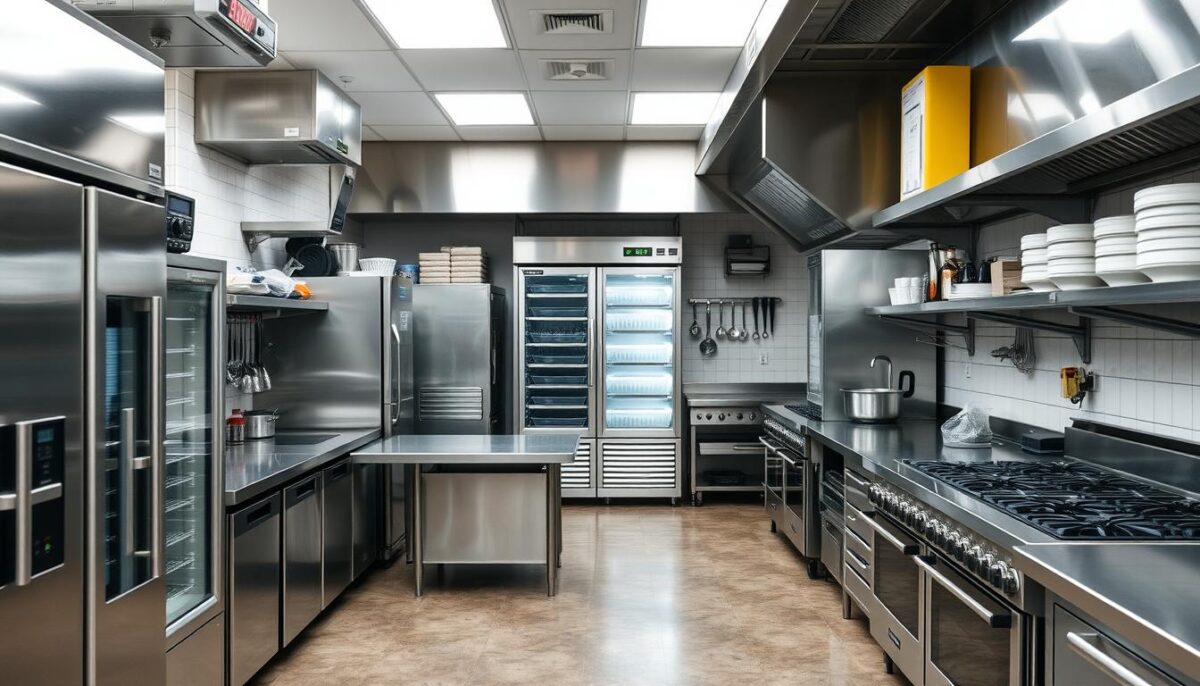
A well-equipped kitchen is the backbone of any successful restaurant, requiring a significant upfront investment. The costs associated with kitchen equipment and furnishings are substantial and can vary widely depending on the size and type of your restaurant.
I’ve researched current market prices and found that a complete commercial kitchen setup in 2025 typically costs between $75,000-$150,000 for a small restaurant and $150,000-$300,000 for larger operations. The equipment costs can be broken down into several key categories.
Kitchen Equipment Investment Breakdown
The core cooking line, including ranges, ovens, grills, and fryers, represents about 25-30% of your kitchen equipment budget. High-quality units can cost $5,000-$15,000 each but offer better reliability and energy efficiency. Refrigeration systems, including walk-ins, reach-ins, and prep tables, account for approximately 20-25% of equipment costs.
When budgeting for equipment, it’s essential to consider both new and used options. Quality used equipment can save 40-60% on upfront costs but may increase maintenance expenses and reduce energy efficiency. Additionally, smallwares and kitchen tools, such as pots, pans, utensils, and storage containers, typically add $15,000-$30,000 to your startup costs.
The layout and design of your kitchen directly impact equipment needs and costs. Efficient designs can potentially reduce equipment requirements by 10-15% while improving operational flow. It’s also worth considering equipment leasing as an option to access high-quality equipment with lower upfront costs.
By carefully planning your kitchen equipment investments and considering factors like energy efficiency, maintenance, and operational flow, you can create a well-equipped kitchen that supports the success of your restaurant without breaking the bank.
Technology and POS Systems
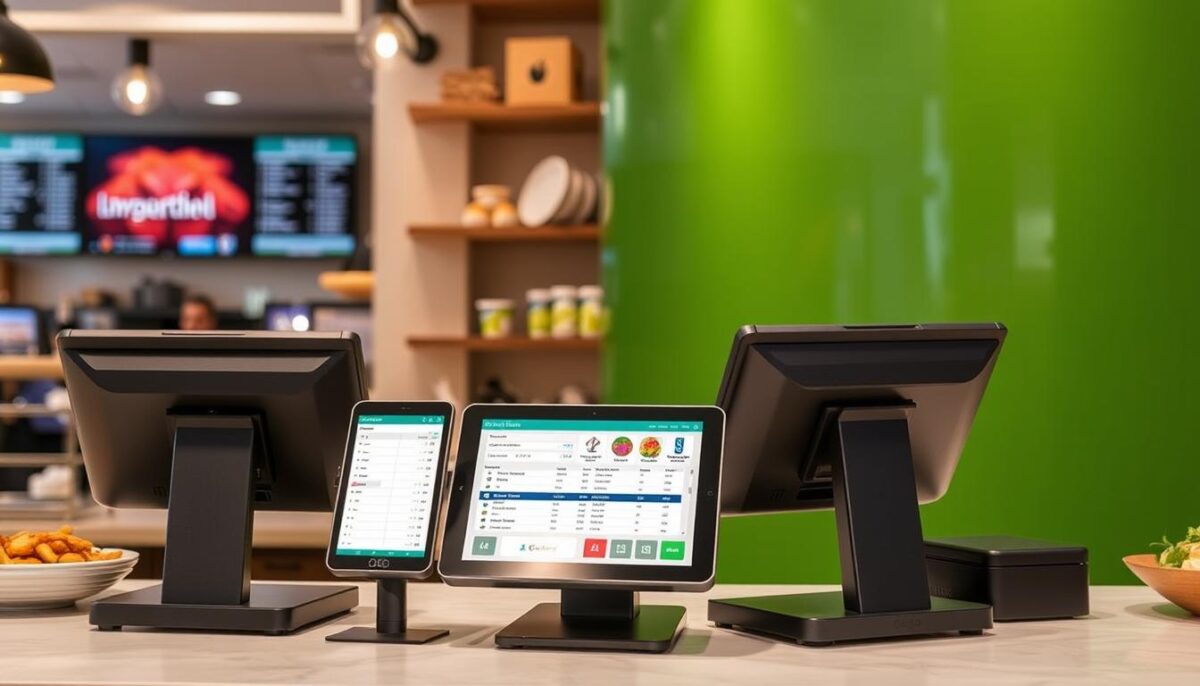
A modern POS system is no longer just about processing transactions; it’s about enhancing customer experiences and operational efficiency. Recent advancements in technology have made POS systems vital for restaurant operations, offering analytics for decision-making and streamlining daily tasks.
The initial investment in a comprehensive technology setup can range between $20,000-$50,000 upfront, with ongoing monthly fees of $300-$1,000. The core POS system is the largest technology investment, with hardware costs ranging from $5,000-$15,000 and software subscriptions running $100-$400 monthly, depending on the features.
Key Technology Investments for Restaurants
Several technology investments are crucial for restaurants, including integrated payment processing, inventory management systems, customer-facing technology, and back-office systems. Integrated payment processing has become essential, with most restaurants paying 2.5-3.5% per transaction in processing fees.
Inventory management systems can deliver significant ROI by reducing food waste and theft, typically costing $50-$200 monthly. Customer-facing technology like online ordering platforms and loyalty programs can increase average order values by 15-20% and improve customer retention, typically costing $200-$500 monthly.
Back-office systems for scheduling, payroll, and accounting have become more affordable, typically costing $100-$300 monthly, while reducing administrative time by 5-10 hours weekly. The integration capabilities between various technology systems significantly impact operational efficiency, making it worth investing in platforms that communicate seamlessly.
Staffing and Labor Costs
One of the largest expense categories for restaurants is staffing and labor costs. Labor costs include not just hourly wages but also vacation pay, sick days, employee benefits, and payroll tax. For most restaurants, labor costs represent around 25% to 30% of total operating expenses.
To calculate your labor cost percentage, simply divide your total labor costs for a period by your total sales for the same period, then multiply by 100. For instance, if your November labor costs were $20,000 and your total monthly gross sales were $65,000, your labor cost percentage would be about 31%, which is slightly above the upper limit of 30%.
- Staffing costs typically represent 25-35% of a restaurant’s total operating budget in 2025.
- The hiring process can cost between $1,000 to $3,000 per position filled.
- Training new employees requires a significant investment, with front-of-house staff needing 20-40 hours of training and kitchen staff requiring 40-80 hours.
Effective Hiring and Training Strategies
To manage staffing and labor costs effectively, it’s crucial to implement efficient hiring and training strategies. This includes budgeting for competitive wages, investing in employee benefits, and optimizing staffing structures. For example, using a mix of full-time and part-time staff can help maintain flexibility during peak and slow periods.
Consider investing in labor management technology that optimizes scheduling based on sales forecasts. This can reduce labor costs by 2-4% while maintaining service quality.
By understanding and managing your staffing and labor costs, you can improve your restaurant’s overall financial health and competitiveness in the market.
Initial Inventory and Supply Costs
Understanding the initial inventory and supply costs is crucial for any new restaurant owner. These costs can significantly impact your startup budget and ongoing expenses. When calculating these costs, it’s essential to consider the type of restaurant you’re opening, as different concepts have varying inventory requirements.
For a small restaurant operation, initial inventory costs can range between $15,000 to $30,000, while larger concepts may require $30,000 to $60,000 or more. This represents approximately 1.5-3% of your total startup budget. The complexity of your menu directly affects these costs, as more menu items require a broader range of ingredients, increasing both initial inventory investment and ongoing storage needs.

Food and Beverage Startup Inventory
Food costs are a significant component of a restaurant’s ongoing expenses, typically ranging from 28% to 35% of total expenses. The exact percentage can vary based on the type of cuisine and menu items. For instance, a steakhouse might have food costs up to 40%, while an Italian restaurant might manage with around 28%.
| Restaurant Type | Initial Inventory Cost | Food Cost Percentage |
|---|---|---|
| Small Operation | $15,000 – $30,000 | 28% – 35% |
| Large Concept | $30,000 – $60,000 | 28% – 40% |
| Steakhouse | – | Up to 40% |
| Italian Restaurant | – | Around 28% |
In addition to food inventory, alcoholic beverage inventory is a significant investment for full-service restaurants, requiring $10,000 to $25,000 for a basic bar program and $25,000 to $50,000 for extensive wine and spirits selections. Non-food supplies, such as cleaning products and paper goods, add another $5,000 to $10,000 to initial costs.
Effective inventory management is crucial for controlling costs and ensuring the success of your restaurant. Implementing an inventory management system can help reduce waste, prevent theft, and optimize ordering processes.
Marketing and Branding Expenses
To stand out in the competitive restaurant industry, a well-planned marketing strategy is essential. As a restaurant owner, you need to consider various marketing expenses to create a strong brand identity and attract customers.
Marketing costs can vary significantly based on your restaurant type, concept, and target audience. For instance, franchised locations may benefit from corporate-supported advertising, while new ventures in competitive markets might require substantial promotional efforts.
Brand Development and Design Costs
Brand development represents a significant upfront investment, with professional logo design, brand guidelines, and visual identity typically costing between $3,000-$10,000, depending on the agency’s experience and deliverables.
- Budget 3-6% of projected annual revenue for marketing, with higher percentages (8-10%) needed during the crucial opening period.
- Website development costs range from $2,500-$8,000, plus $20-$100 monthly for hosting, maintenance, and updates.
- Allocate at least $5,000-$15,000 for grand opening marketing, including local advertising, promotional events, and influencer partnerships.
- Social media marketing requires both financial investment ($500-$2,000 monthly for paid promotion) and time investment (10-15 hours weekly for content creation and community management).
Effective marketing strategies, such as harnessing social media and progressing to email marketing as your customer base grows, can help drive sales and increase customer loyalty.
Operational Costs and Working Capital
Operational costs and working capital are vital components that determine a restaurant’s financial health. Understanding these costs is crucial for maintaining a profitable business.
Operational costs in restaurants are divided into fixed and variable categories. Fixed costs remain consistent each month, including expenses like rent and insurance. On the other hand, variable costs fluctuate with the restaurant’s activity level, such as food and beverage purchases.
Monthly Fixed and Variable Expenses
New restaurants should budget $20,000-$40,000 monthly for small operations and $40,000-$80,000 for larger concepts, excluding initial startup expenses. Fixed monthly expenses typically include rent (5-10% of revenue), insurance ($1,000-$3,500), and utilities ($1,500-$4,000).
| Expense Type | Monthly Cost Range | Percentage of Revenue |
|---|---|---|
| Rent | Varies | 5-10% |
| Insurance | $1,000-$3,500 | |
| Utilities | $1,500-$4,000 | |
| Food Costs | Varies | 28-35% of food sales |
Variable costs include food (28-35% of food sales), beverage (18-25% of beverage sales), and hourly labor, which increase or decrease with customer traffic. It’s recommended to have 6-12 months of operating capital available before opening to cover the cash flow gap until the restaurant achieves profitability.
Effective management of these costs is crucial for the financial sustainability of the restaurant. Creating detailed financial projections with monthly breakdowns can help identify potential cash flow challenges before they become critical.
Insurance and Risk Management

Insurance coverage is a critical component of a restaurant’s financial planning. As a restaurateur, you face numerous risks, from customer injuries to data breaches, which can significantly impact your business. Effective risk management through insurance is vital for restaurant success.
Comprehensive restaurant insurance typically costs between $3,000 and $10,000 annually, depending on your location, size, and specific risk factors. This coverage includes several key components:
Essential Insurance Coverage Types and Costs
- General Liability Insurance: Protects against customer injuries and property damage, with premiums ranging from $1,000 to $3,000 annually for $1 million in coverage.
- Workers’ Compensation Insurance: Legally required in most states, with premiums based on payroll size and job classifications, typically costing $2 to $6 per $100 of payroll for restaurant employees.
- Property Insurance: Protects your building, equipment, and inventory against damage or loss, with premiums ranging from $1,000 to $5,000 annually depending on property value and location.
- Liquor Liability Insurance: Crucial if you serve alcohol, with premiums ranging from $1,000 to $4,000 annually, providing protection against alcohol-related incidents.
- Business Interruption Insurance: Covers lost income during forced closures, typically adding 15-25% to your property insurance premium.
- Cyber Liability Insurance: Protects against data breaches and technology failures, with premiums starting around $500 annually.
Maintaining proper insurance coverage minimizes risks, offering peace of mind and allowing restaurateurs to focus on daily operations and strategic growth. By understanding and investing in the right insurance policies, you can safeguard your restaurant against unforeseen legal and financial crises.
Cost-Saving Strategies for New Restaurant Owners
To ensure the financial stability of your restaurant, it’s essential to implement cost-saving strategies. Effective cost management is crucial for maintaining profitability in the competitive restaurant industry. By prioritizing essential expenditures and scrutinizing other areas, you can minimize expenses without sacrificing quality or service.
Smart equipment purchasing represents one of the biggest opportunities for cost savings. Quality used equipment typically sells for 30-60% less than new while still offering years of reliable service. You can explore restaurant auction sites, equipment liquidators, and restaurant supply marketplaces to purchase barely-used equipment from recently closed restaurants at significant discounts.
Smart Equipment Purchasing Decisions
When making equipment purchasing decisions, prioritize based on necessity and impact. Invest in high-quality versions of critical items like main cooking equipment and refrigeration, while economizing on less essential pieces. Consider leasing equipment rather than purchasing outright to conserve initial capital.
Energy-efficient equipment may cost 10-20% more upfront but can reduce utility costs by 20-30%, providing significant long-term savings. Additionally, preventative maintenance programs can extend equipment lifespan and prevent costly emergency repairs. Building relationships with multiple equipment suppliers can create competition for your business, leading to better prices, extended warranties, and favorable payment terms.
By adopting these cost-saving strategies, new restaurant owners can effectively manage their expenses and maintain a competitive edge in the market. It’s about making informed decisions that balance quality and cost.
Creating a Comprehensive Restaurant Financial Plan
A well-structured financial plan serves as the backbone of a successful restaurant business. It provides a roadmap that guides all financial decision-making, ensuring that your restaurant remains on track to achieve its goals. One crucial aspect of this plan is financial forecasting, which involves estimating future revenue and expenses based on market trends, historical data, and industry benchmarks.
To create an effective financial plan, you should include detailed startup costs, operating expenses, revenue projections, cash flow analysis, break-even calculations, and capital requirements. This comprehensive approach will provide a complete financial roadmap for your restaurant. Setting realistic sales projections is also crucial, as most new restaurants achieve 50-70% of their projected capacity in the first three months.
Financial Forecasting and Milestone Planning
Financial forecasting should include monthly projections for the first 24 months, quarterly for years 2-3, and annually for years 4-5. This will help you anticipate and prepare for various financial scenarios. Establishing clear financial milestones tied to specific metrics, such as achieving food costs below 32% or labor costs below 30%, will drive progress and ensure that your restaurant is meeting its financial goals.
Regular financial review processes are essential to monitor performance against these goals. This includes weekly analysis of key metrics, monthly review of complete financial statements, and quarterly reassessment of annual projections and goals. By leveraging technology tools like restaurant-specific accounting software and inventory management systems, you can streamline financial management and make informed decisions.
Your financial plan should also include multiple scenarios (conservative, realistic, optimistic) to help prepare for various business conditions and identify potential cash flow challenges before they become critical. By doing so, you can ensure that your restaurant business remains financially stable and poised for long-term success.
Conclusion: Setting Your Restaurant Up for Financial Success
With the true cost of opening a restaurant now laid out, you can approach your venture with confidence. Opening a successful restaurant business requires meticulous financial planning, from initial startup costs to ongoing expenses like inventory and staff salaries.
To ensure financial success, it’s crucial to maintain a robust financial management system, tracking every expense and revenue stream. This enables you to identify opportunities and challenges early, making informed decisions to adjust your business strategy as needed.
Your restaurant’s success depends on balancing culinary creativity with financial discipline. By understanding the costs involved and maximizing revenue through strategic menu pricing, effective marketing, and excellent customer service, you can build a loyal customer base and drive long-term sustainability.
By following this guide and regularly revisiting your business plan and financial projections, you’ll be well-equipped to navigate the challenges of the restaurant industry and achieve success.
FAQ
What is the average cost per square foot to open a restaurant?
The average cost per square foot can range from 0 to 0, depending on the location, size, and type of restaurant. For example, a high-end restaurant in a major city like New York or Los Angeles may have a higher cost per square foot due to the premium location and upscale finishes.
How much does kitchen equipment cost for a new restaurant?
Kitchen equipment can be a significant expense, with costs ranging from ,000 to 0,000 or more, depending on the type and quality of the equipment. I recommend investing in energy-efficient and durable equipment to minimize long-term expenses.
What are the essential licenses and permits required to open a restaurant?
To operate a restaurant, you’ll need to obtain various licenses and permits, including a food service permit, business license, and liquor license (if applicable). The costs of these permits can vary depending on your location, but you can expect to pay several thousand dollars.
How much should I budget for marketing and branding expenses?
Marketing and branding expenses can vary widely, but I recommend allocating at least 5-10% of your overall budget to cover these costs. This can include expenses like social media advertising, website design, and promotional materials.
What is the typical staffing cost for a restaurant?
Staffing costs, including labor and training expenses, can account for 30-40% of your overall operating expenses. This includes costs like employee salaries, benefits, and uniforms.
How much working capital do I need to keep my restaurant running?
It’s essential to have sufficient working capital to cover ongoing expenses, such as inventory, labor, and rent. I recommend having at least 3-6 months’ worth of operating expenses set aside to ensure a smooth transition.
What types of insurance do I need for my restaurant?
As a restaurant owner, you’ll need to consider various types of insurance, including liability insurance, property insurance, and workers’ compensation insurance. These policies can help protect your business from unforeseen risks and expenses.